Wednesday, 27 November 2013

Norman Borlaug: “The Man That Saved a Billion Lives”

by Toby Benham


Born on the 25th March 1914, Norman Borlaug has been described as the man that has saved more human lives than anyone who has ever lived. This truly inspirational man devoted his life to help solving world hunger by developing new types of wheat. He was quoted saying, “We are 6.6 billion people now. We can feed 4 billion. I don’t see 2 billion volunteers to disappear”. As well as being the labelled “the father of the green revolution”, Borlaug won the Nobel peace prize in 1970.

After growing up in Iowa, Borlaug went to the University of Minnesota to study Forestry, in between two stints working for the US forestry service. He later returned to the University to do a masters and PhD in plant pathology. This led to him taking a job in Mexico as geneticist and plant pathologist. Not only did this move mean leaving his job at highly respected chemical company DuPont (who had offered to double his salary), he temporarily left behind his pregnant wife and young daughter. His work in Mexico included research in genetics, plant breeding, plant pathology, entomology, agronomy, soil science and cereal technology. This was very successful leading to production of a high yielding, short strawed, disease resistant wheat. He arranged for the new cereal strains to be put into extensive production.

His work was especially influential in India and Pakistan. In fact, between 1965 and 1970, wheat yields nearly doubled in these countries, helping to provide security for feeding expanding populations. Prime Minister Singh and President Patil, both of India, paid tribute saying, “ Borlaug’s life and achievement are testimony to the far reaching contribution that one man’s towering intellect, persistence and scientific vision can make to human peace and progress”.

He died at the age of 95 in 2009 to lymphoma. I hope that after reading this that you can appreciate what an extraordinary man Norman Borlaug was, as well as the great contribution he made not only to science, but to the world’s population. One of the greatest scientists and humanitarians that has ever lived; “the man that saved a billion lives”.

Monday, 25 November 2013

Nomenclature – What’s really in a name?

by Sam Matchette

If I were to ask you what Captain Blackbeard, the Rocky Mountains and jeggings all have in common, what would you say? No, this is not a joke – although this would make for a very intriguing start to a ‘… walked in to a bar’ gag. The answer is simple: they each have a very appropriate and informative name. Captain Blackbeard had a beard that was (probably) black, the Rocky Mountains are certainly rocky and jeggings are the most recent descriptive portmanteau to hit our vocabulary shelves! However, the art of nomenclature (naming) isn’t always as straight forward; a point very relative in the biological world with regards to naming species; formally called Binomial nomenclature.

First and foremost, binomial nomenclature itself differs depending upon the organism you are dealing with. If you are naming animals, you would consider the International Code for Zoological Nomenclature (ICZN), whereas for plants, fungi or algae you would use the – very appropriately named - International Code for Nomenclature for algae, fungi and plants (ICN). Both resources enforce a series of codes and rules that one must abide by, in order to maintain evidential consistency throughout the natural world.


Focusing upon the animal kingdom, the ICZN has six main principles. When a species is first discovered, it is described and given a name. The first principle, named binomial nomenclature, states that the name of any given animal is made up of two Latin names (binomen); a generic name and a specific name. Devised by Carl Linnaeus, this principle embodies all the species seen today, including Homo sapiens, Passer domesticus, Gibbula umbilicalis. This name must be unique, as claimed by the principle of homonymy. The discovered organism’s name is recorded on an ICZN database together with name of its discoverer and the date of discovery. For each species ever described on the database, there is usually a list of names (both generic and specific) provided after the first, long-standing name was put forward. These, essentially irrelevant, names are called the junior synonyms. They only come in to play if a re-classification occurs. If there is a species-split with a new population needing a name, the principle of priority ensures that the new specific name is the oldest available junior synonym. Those name conflicts that cannot be resolved using priority are resolved by the principle of first reviser; the first subsequent author decides which name(s) to use from that moment on. Slightly more confusing is the principle of coordination; which presents when a family-group name, genus-group name or species-group name is established, all other relevant groups must also simultaneously bear that name with relevant prefixes. For example, the family name Giraffidae was established, meaning that the sub-family name (should we need one) automatically becomes Giraffinae. Linking with this is the principle of typification. This claims that any family-group name must have a type (or representative) genus and any genus-group name must have a type species. For example, the family name of Giraffidae has Giraffa as its type genus (as in Giraffa camelopardalis).

Despite the terrifying formality of this process, if all principles are fulfilled, then the fun can begin. And boy, do scientists like to have fun! The beauty of needing to be unique (as the principle of homonymy requires) is that you can be as creative as you like. After all, as with everything, names come in all shapes and sizes; from the great evening bat, Ia io, to the soldier fly, Parastratiosphecomyia stratiosphecomyioides.

Longdong stream salamander 
Unsurprisingly, over the years, the concoction of creativity and taxonomy has produced some very interesting results. Usually, names originate from a description, a location, a person or an organisation relative to the organism’s discovery; however some have become remarkably tenuous and down-right crude. An example that springs to mind is the Batrachuperus longdongensis; a stream salamander with – you guessed it - an in-conspicuously long penis. Less subtle is the lily plant with the name Narcissus assoanus – discovered seemingly by a scientist with a phenomenal grudge. Scientists have even delved in to the world of popular media; notably the spider, Apopyllus now, who appears to be an avid Martin Sheen fan.

One of my personal favourites – from a devilishly, imaginative view point – is the Thorny Devil. This lizard’s scientific name is Moloch horridus; honouring the heaven-rebelling demon Moloch known to devour children, aptly comparative to the lizard’s diet of unsuspecting ants. Furthermore, many scientists have dabbled in creative word-play; creating such scientific names as the leafhopper family, Cicadellidae, which is officially the longest word with all its letters twice, or the palindromic beetle, Orizabus subaziro.

Thorny Devil
For the narcissistic among you, it may be disappointing to hear that it’s just ‘not cricket’ when you name a species after yourself. However, there are ways and means of overcoming this. The obvious being to find a friend that shares your desire to have a species named after them, and then each simultaneously discover a species that can be named after the other person. Undoubtedly fiendish, but no less true as the taxonomists Reichardt and Lange-Bertalot evidently proved; honouring each other with name-bearing species in a Diatom genus.

So, if you’re the buddy biologist type endeavouring for a life of research, you may just want to take a moment and think: what would my species name be? It may be more fun than you think. Now, “Captain Blackbeard, the Rocky Mountains and some Jeggings walk in to a bar…”

Wednesday, 13 November 2013

Ten Extinct Animals you wouldn't want to meet in a dark alleyway

by Rob Cooper


1. Daedon: the ‘terminator pig’

Nicknamed the ‘terminator pig’ this hulking brute of an animal was a member of the ungulate family that today includes pigs, giraffes and deer. It had enormous bony flanges similar to the warts of the warthog which accompanied its titanic jaws giving this predator a bone crushing bite in addition to its fearsome tusks.


2. Titanoboa: the giant snake

This great serpent emerged just after the demise of the dinosaurs in the Paleocene epoch and was estimated at 15 meters long and a weight of 1135kg making it easily the largest snake that has ever existed which would not be vexed in the slightest by swallowing a comparatively measly human.


3. Deinosuchus: 'terror croc' 

One of the three largest crocodilians to have ever existed Deinosuchus could have reached lengths of twelve meters and lived alongside tyrannosaurs such as the fabled T.rex and is theorised to have predated upon the dinosaurs that unknowingly came to drink from cretaceous watering holes. Okay, maybe it wouldn't have fitted in a dark alleyway but such a creature does not deserve to be neglected. 


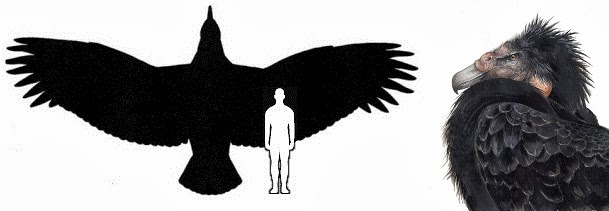
4. Argentavis: the largest flying bird


The largest flying bird to have ever lived had a wingspan of around seven metres and would have likely scavenged and displaced Miocene predators from their kills. It’s skull morphology suggests it was suited to swallowing prey whole so whilst humans may lie someway from its preferred prey it would still make for an intimidating site emerging from the darkness. 


5. Gigantopithecus: the real yeti 

The legend of the yeti has fascinated many people throughout history and there seems to have been no better candidate than Gigantopithecus. This ape stood at around three meters tall and while its teeth indicate it was exclusively vegetarian an unexpected encounter with such an enormously powerful ape would be far from desirable. 


6. Arctodus simus: the giant bear

Arctodus Simus, the giant short faced bear could look you in the eye whilst still remaining on all four legs. If the titan deigned to stand it would have easily reached three meters in height. Around 11,000 years ago Arctodus Simus is proposed to have filled the niche of a kleptoparasite; intimidating smaller predators such as dire wolves, Smilodon and American lions from their kills with its enormous size and strength.


7. Utahraptor: flesh eating dinosaur 

There had to be at least one theropod (clade to which all carnivorous dinosaurs belong) dinosaur in here. Considering T.rex or Giganotosaurus would find it near impossible to fit inside an alleyway we’ll take the lesser known Utahraptor. The Velociraptor in Jurassic park may have been greatly exaggerated in size, being in reality the size of a turkey, but Utahraptor dominated even these exaggerated raptors reaching seven meters in length and with a sickle claw nine inches in length clearly indicating this 126 million year old predator could disembowel a human with consummate ease. 


8. Megalania: giant monitor

The size of this giant monitor lizard is difficult to determine as several studies place the weight anywhere from 300kg to nearly 2 tonnes. Regardless Megalania is still a monster compared to any modern day lizards. With heavily built limbs and a huge skull full of viscously serrated teeth it is proposed to have hunted Australian megafauna such as Diprotodon the ‘giant wombat’. If that wasn’t bad enough it seems likely Megalania, akin to modern monitor lizards such as the komodo dragon, was venomous making Megalania not only the largest terrestrial lizard but the largest venomous vertebrate to have ever existed. 


9. Kelenken: terror bird 

Picture a three meter tall bird with a skull 28 inches long, 18 inches of which was composed of a beak that was used in the same manner as an axe to inflict debilitating injuries on its prey and you get a rough idea of why it might be a good idea to stay the hell away from Kelenken. Belonging to the aptly named ‘terror birds’ this particular animal had the largest head of any bird known and was theorized to have either delivered viscous hammer blows to crush the bones of large prey or grab hold of smaller prey and shake them in much the same way that a dog might shake a rat today with the small addition that Kelenken would usually end up breaking the back of the unfortunate organism.

10. Euchambersia: Permian predator

By far the smallest animal on this list Euchambersia was a reptile that lived before the dinosaurs in the Permian period 250 million years ago. Euchambersia was a member of the therapsid order of reptiles which included the ancestors of modern day mammals and are often referred to as the ‘mammal like reptiles’. Despite its small stature this predator had an ace up its sleeve… Venom. The large canine teeth clearly exhibited by Euchambersia had venom grooves connected to venom glands in a very similar way to modern snakes in order to inject venom into the prey upon biting down. This killing strategy made Euchambersia a force to be reckoned with in the Permian deserts of South Africa.

Do you have any other suggestions? Let us know in the comments section.

Monday, 11 November 2013

The science of mind reading

by Tom Ridler


The idea of someone being able to tell exactly what we are thinking is no doubt a scary one, but don’t worry, we’re not there yet. This said, the electroencephalogram, or EEG has been used for some time to measure brain activity in human patients and there is a great deal of information to be obtained from all those wiggly lines.

How does EEG work? Our brains are made up of billions of neurons, communicating with each other all of the time. Brain cells “talk” through synapses, creating tiny electrical signals. With so many cells in the brain, this produces masses of electrical activity and it can be measured by placing sensors on the surface of the skull.  This is usually done with the familiar EEG cap, containing a great number of sensors, meaning that different areas of the brain can be measured simultaneously.

What can you see? What we find when we record this brain activity is that the signal within the brain oscillates in wave-like manner. These brain waves may originally seem confusing and random, but analysis has shown that they can be isolated into discrete frequency bands. You can think of the brain like an orchestra, with all the individual instruments creating different sounds that all come together into one complex piece of music.

What does it all mean? These common frequencies may represent differences in brain states. For example, when you are in deep sleep slow oscillations are seen (called delta waves) or during high levels of concentration fast waves (such as beta or gamma oscillations) may occur, signifying intense thought processing. How about some meditation? Well you won’t be doing that without plenty of alpha waves, associated with relaxation and reflection.  

How can it be used? EEG can be used in a great number of ways. We can diagnose some conditions such as epilepsy by recognising seizure activity. There is also potential to help suffers of locked in syndrome (a condition where sufferers, while totally conscious, cannot move or communicate). On a lighter note, many people have been working on ways in which we can control objects with our minds. Just imagine, a brain-machine interface would be able to control a robot, unlock a car or turn on a home appliance just through the power of thought. This isn’t so far of, your own portable (and affordable) EEG machines are available to buy, allowing you to play games and even control the plot of a film through changes in your brain waves. 

Sunday, 10 November 2013

Lake turns animals into petrified statues


Greek mythology will tell you that Medusa was beheaded a long time ago, so those of you rooting for a supernatural or spiritual explanation I am sorry to disappoint. The real cause of this mummification is no less fascinating. Lake Natron, a vast death swamp located in northern Tanzania gets its name from Natron which is a naturally occurring sodium carbonate compound. The compound is sourced from volcanic ash which when collected by surface runoff, flows into the lake and provides the lake with an unnaturally high alkaline content.

Calcium is more readily precipitated from alkaline solutions so over time high amounts of calcium can be precipitated along the shoreline. When animals die and are immersed in the deadly waters of the lake they become petrified and turn into a bizarre and horrific spectacle. Oddly, the lake isn't completely lethal and is home to flocks of daredevil flamingos that return to nest on an annual basis. I should point out that the poses in the photographs are artificially created by photographer Nick Brandt.

by Danny Stubbs

Sunday, 3 November 2013

Synapse Science News #1 #Nov2013


Too busy to keep track of all the science news during the week? Don’t fear Synapse is here. Check out this week's news.

Doomed Planet gives hope for other Earths – Kepler-78b is the first exoplanet discovered which shares both a similar mass and composition to earth. Unfortunately, it is far too close to its star making it burning hot and inhospitable. However, despite its position, it’s similarity to Earth gives new hope to astronomers that other earth like twins are waiting to be found. Read more here.

Cheating Light defies Newton’s 3rd Law – A team of researchers found that laser pulses may accelerate themselves around optical fibre loops seemingly defying that every action must have an equal and opposite reaction. Such behaviour may only be applicable in light but provides a possible source for improving electronics and communications in the future. Find out more here.

Final phase of dark matter hunt imminent  Particle detector LUX has been shown to be the most powerful detector of its kind but it failed to detect any dark matter during its first run. In 2014 its second run is set to probe deeper once again which, if our theories about dark matter are correct, should ensure that dark matter is indeed detected. Read more here.


Rachel Greenwood

Wednesday, 30 October 2013

Trick or Trick? Halloween Creature Contenders

by Sam Matchette


Halloween. Even at the mention of it, I’m sure a good number of you are picturing a vast array of beasts, ghouls and monsters – or any other blood-sucking demon from hell. Entangled in this net of horror are a number of animals; all of which have developed a special, cult relationship with the day. For example, black cats, wolves, bats and spiders all receive the ‘Halloween treatment’ – mostly because they all seemingly do well in a witch broth or two. However, in true cliché breaking fashion, I am convinced that nature can offer a far more blood-curdling spectrum of unlikely beasts (in their own right) than stereo-typically portrayed. Let’s explore the often (and literally) over-looked contenders…

Surprisingly, the first is typically only an inch long, but will undoubtedly send shivers through at least half the people in the room. Native to the amazon basin, the Candiru Fish is a translucent, eel-like fish with catfish barbels at its anterior end. Parasitic by nature, Candirus follow the water flowing out of gill flaps of other larger fish. It then dives in and grasps to the inner layer of the gill cavity. Here, it can open up its sharp, umbrella-like spines to lock itself in position whilst vigorously suckling the host’s blood. Once full, they unhook and sink to the river floor to digest the meal - whilst eying the next passing blood bonanza. The Candiru fish is even also called the Vampire fish for this very reason. But, of course, this process isn’t limited to fish – brace yourselves. A suitable flow of liquid for the Candiru can include the flow of urine from an organism’s urethra. Thus, an unsuspecting tourist caught short on the amazon may well get a very, very nasty shock – allowing the fitting title of ‘willy fish’ to be adopted. Naturally, the pain is said to be indescribable. As far as Halloween costumes go, this may not make the obvious choice; for ‘Fright Factor’ however, the Candiru fish certainly has my vote.
Antlion 

Along a similar line as the Candiru fish, our next contender is exceptionally frightening when considered from the prey’s viewpoint. Winner of one of the coolest names in the animal kingdom, the Antlion (or Sand dragon) is exactly what it says on the tin; a golden-hair covered beetle-like insect that feeds on ants or other unsuspecting morsels. It is in fact the predatory larvae of the ‘antlion lacewing’, but has adopted its own title as ‘antlion’ due to its ability to remain in the larval form for many years. The antlion builds a self-built conical hole in very fine sand and waits patiently at its centre – picture George Lucas’ Great Pit of Carkoon. A careless slip into the hole leaves an insect doomed: fighting a far too literal uphill battle to escape the large grabbing mouth appendages of the antlion. Inevitably, exhaustion takes over and the insect is quickly speared and dragged alive into the sand, to be drained of its bodily fluids. This animal is not only scary in appearance, but also plans the world’s scariest surprise party - a Halloween must-have!

Horned 'Toad'
No Halloween beast can be without a gory element; whether it is being a blood-sucker, blood-covered or down-right bloody scary. This next organism, however, can go one step further. The Horned Toad is a small, squat lizard found in the arid lands of North America. The nickname of toad refers to its rounded body and stumped tail. However, unlike the toads in the traditional witch stories, this ‘toad’ won’t be boiled so easily. As a very last resort of predator-defence, this lizard reveals its dark side; by restricting the blood leaving the head, blood pressure builds to such an extent that the blood vessels surrounding the eyes burst. A remarkably accurate blood stream then erupts from the corner of the eye and can travel up to five feet. Being acrid tasting (and just plain messy), the predator understandably reels giving the lizard time to escape. Re-enacting this gory trauma would definitely be a winner – needing only a squeezy bottle of ketchup and very understanding friends.

Alternatively, some other organisms choose another anti-predator defence: toxins. However, the culprits are not who you would expect. The Pitohui, Little Shrikethrush and the Blue-Capped Ifrita - all originating from New Guinea – are the only known genera of bird that are poisonous. The said toxins are batrachotoxins: obtained from Chloresine beetles that make up part of their insectivorous diet. They make look like innocent songbirds, but these birds pack a punch – just handling them bare-handed can cause numbness and tingling. That’s frightening enough, let alone imagining the state a poor predator would be in after slipping one of these in to its mouth.

Ichnuemon Wasp
The last organism could be the worst of the bunch. Famously despised by Charles Darwin himself, the Ichnuemon Wasp family are renowned for their torturously wicked ways. Targeting primarily larvae or pupa, the adult female will inject (using a very long, sharp ovipositor) her eggs in to a host body – they have even been known to drill through wood known to be sheltering located larvae. As well as the eggs, the adult also delivers a toxin leaving the host larvae paralyzed. Unfortunately for the larvae, from this point on, it is quite spectacularly doomed. The eggs inevitably hatch within the larvae and begin to eat; and eat and eat. Starting with the non-essentials; fat cells, muscle cells and non-vital organs, the wasp larvae aim to keep the host larvae alive for as long as possible. Yes, you read right: the host larvae, kept fresh and alive by the paralyzing toxin, get literally eaten alive from the inside-out. It’s no wonder really where the inspiration for Ridley Scott’s Alien came from. The seemingly agonizing ordeal for the host larvae ends with the wasp larvae consuming the vital organs; and then erupting out of the husk to spread more joy elsewhere. Undoubtedly, the ichneumon wasp would make an excellent fear bringing Halloween hero, but regretfully do not win the ‘best-way-to-bring-up-offspring’ award.

These were just a handful of organisms, from many conceived by nature, with a horror story that I believed was worthy of ‘Halloween treatment’. So if you’re looking for inspiration for this year’s Halloween costume or party, just remember these gruesome mercenaries and the nasty ‘tricks’ that they have up their sleeves. You may just fancy a ‘treat’ instead.

Thursday, 24 October 2013

Transplanting Memories?

by Rhema Anderews

George Bernard Shaw once said, “All great truths begin as blasphemies.” In the realm of heart transplantation technology, none has posed greater uproar than the controversial concept of cellular memory.

Cellular memory is the notion that the brain is not the only organ capable of storing memories. In fact, all living cells possess “memory”. Evidence for this has been found predominantly in heart transplant patients. Studies on cellular memory from transplant patients are often conducted by scientists with the aid of the hospital system which forbids the recipient to know or communicate with the donor’s family with most cases without the mention of names.

On May 29, 1988, Claire Sylvia received both the heart and lung of an 18-year-old man killed in a motorcycle accident. After the surgery, Sylvia claimed an intense craving for beer, chicken nuggets and green peppers, all of which she never liked before. She began to assume a masculine walk (peculiar for the dancer), started swearing in conversations, and for no apparent reason took up motorcycle riding at dangerous speeds, which was totally out of character. Sylvia even started having recurring dreams of a mysterious man. In her book entitled “A Change of Heart”, she recounted a dream where she kissed a boy thought to be named Tim L. and inhaled him into her. Upon meeting the “family of her heart” as she put it, Sylvia learned the name of her donor was in fact Tim L., and all of the changes she experienced closely mirrored that of Tim L. who strangely at the point of death had chicken nuggets in his pockets. Sylvia’s story quickly captured media attention and soon after, many other transplant recipients came forward with similar testimonies.

The most striking example is that of an eight-year-old girl who received the heart of a ten year-old-girl. Post-surgery, she was consistently plagued with distressing dreams of an attacker and a girl being murdered. Her nightmares proved so vivid that even her psychiatrist believed them to be genuine memories. As it turns out, the donor was a murder victim and as a result of the recipient’s violent recurring dreams, she was able to describe the horrifying incident and the murderer to such great detail that the police eventually apprehended, arrested and convicted the killer.

Ongoing research has shown that neuropeptides and receptors previously known to exist exclusively in the brain have been discovered in places throughout the body, especially in major organs such as the heart. These neuropeptides are a means for the brain to communicate with other organs and for these organs to send feedback to the brain. However, little is known about whether these neuropeptides can store memory; due to the amount of peptides in the heart, there seems to be a strong correlation between the two. But if this were the case, then why don’t all patients go through this experience?

There is no solid evidence that the reports are nothing more than coincidence and fantasy. Even so, the stories are intriguing and we should expect some serious investigation into the matter in the near future. Until then let’s keep an open heart.

Tuesday, 22 October 2013

Brinicles - ‘Icicles of Death’

by Danny Stubbs


Stretching down from the surface of the ocean, these Icy spikes give unfortunate bottom dwellers an unpleasant frosty fate. In short, they form when supersaline (very salty) water subsides from the surface of sea ice and sinks towards the seabed, forming an icy sheath during the process. This phenomenon was first filmed by the BBC as part of their series ‘The Frozen Planet’ in 2011.

So how do these sub-zero spears form? One of the main things you need to know is that salt lowers the freezing point of water by acting as an impurity. At 0°C (the freezing point of water and melting point of ice) there is an equal amount of molecules entering and leaving the solid state. Salt interrupts this exchange of water molecules and stops them entering the solid phase, hence the water remains in a liquid form. At a lower temperature the amount of molecules leaving the solid state balances the amount entering, allowing the water to freeze but at a lower temperature than freshwater. As a result saltwater freezes at minus two degrees Celsius.

As the seawater freezes the salt becomes concentrated because it doesn’t fit in with the lattice structure of the ice and it is cooled below zero degrees. This creates an area of water with high concentrations of salt (brine) at temperatures below freezing. Since salty water is denser than pure water and colder water is denser than warmer water, the brine begins to sink and forms a vertical column called a brine plume that stretches towards the seabed. The water around the column is cooled below zero and begins to freeze, forming a ‘Brinicle’.

What makes them important?Brinicles have a biological impact, they freeze any sluggish organisms that are too slow to escape the freezing of the seabed. However they also create areas that never fully freeze in regions such as in the Antarctic, which prove to be a vital refuge for some critters during the bleak winter months.These brine plumes are also important for the climate because they aid the circulation of water throughout the oceans of the world. The heavy supersaline water that sinks and migrates towards the equator helps replenish the cool water that warms and rises in areas such as the tropics. 

Check out these incredible time lapse images of the Brinicles forming.


While these principles are fresh in your mind, think about why we add salt to icy roads in the winter months. Did you figure it out? The salt lowers the melting point of ice so it more readily turns back into liquid form. Ice and salt – much more compelling than you originally thought!


Monday, 21 October 2013

Does time fly for a fly?

by Thien Ho


It appears that time flies for anything but flies – and other small animals. A recent paper published in the journal Animal Behaviour found that the size and metabolic rate of an organism was directly related to its perception of time. The findings, led by Dr Andrew Jackson at Trinity College Dublin in the Republic of Ireland, indicated that smaller animals with faster metabolic rates perceive time in slow motion. Dr Jackson had measured a range of different organisms and their reaction times against individual flashes of fast-flickering light. The scientists then based the measurements on the critical flicker fusion frequency, the point at which the flashes seem to merge together until the light source looks constant, to provide an indication of the time perception in the organisms. It revealed that houseflies saw the light flickering almost seven times faster than humans can, at a rate similar to other small mammals and birds such as squirrels and pigeons. These animals perceive the world in a very different way to everything else as they absorb so much more visual and audio information per second.

“[For the fly] it feels like you are moving so slowly towards them,” Dr Luke McNally, a researcher of Edinburgh University, said. “It's the same as the famous bullet-time scene where the bullets are moving at this incredibly slow rate as far as Keanu Reeves is concerned.” This significantly fast reaction time is the difference between life and death in the wild, especially for smaller animals as their ability to process information quickly is essential in order to escape from predators. Visual systems that send information to the brain at very high frequencies are useless if the brain cannot process it all as quickly. Thus, this research only exposes the impressive abilities of even the smallest brains. “Flies might not be deep thinkers, but they can make good decisions very quickly,” said Professor Graeme Ruxton, who also participated in the research. 

Saturday, 19 October 2013

Weird and Wonderful: Hidden Horrors Returns!

Check out these awesome images of tiny creatures under the microscope.

Zebra fish embryo

Locust

Tadpole

Spiny Assassin Bug

Velvet mite

Butterfly
Processionary moth caterpillar

Thursday, 17 October 2013

The distinction of mirror images

by Kate Hammond


Despite initial appearances the majority of mirror images are not identical. Each half has a distinct orientation, one left and one right. However, we appear not to retain this orientation information. Massachusetts Institute of Technology research scientist Daniel D.Dilks asked a random selection of people to recall the direction in which the queen was facing on a one penny coin. Only 50% could correctly identify her direction; even though it is an object seen everyday, the results were as if by chance. This would suggest that our memory of an object is actually independent of its orientation. Similarly, an advertising campaign presented two copies of the Mona Lisa to volunteers. In one (the original) she faced to the left and in the other (a manipulated version) she faced to the right. Although all easily identified the picture as the Mona Lisa, very few could say with confidence which was the correct version. The advertising campaign used the slogan ‘don’t mistake familiarity for knowledge’, but what can also be taken from this is further evidence that we represent the identity of an image in our memory independent of its orientation.

Practically, it makes little sense to store information regarding the orientation of objects. Distinguishing mirror images is very rarely needed, and, furthermore, we need to be able to recognize objects from all view points. However, it has also been shown that for a short period of time immediately after viewing an object, orientation information is retained. Looking at an object, looking away, and picturing it immediately afterwards confirms this. This has lead to a major theory concerning object recognition; objects are remembered as seen from a particular point of view, but the brain has adapted so that it stores with it its mirror image. The object can then be matched equally easily to itself or to its mirror image. In this way, the initial orientation information is lost.

Although it is mainly advantageous, this adaptation also has its downfalls. The visual system begins life unable to distinguish mirror images in memory. Consequently, when it is necessary to distinguish between two mirror images, we have to learn to encode each mirror image as an object in its own right. Taking the every day example of b/d and </>, little children struggle to distinguish between the two but over time the mirror images acquire the status of separate objects. This explains why everyone is able to picture b or d in their head, but is unable to picture the orientation of a coin.

Wednesday, 16 October 2013

The Cyclops: A Huge Terrible Beast

by Rob Cooper


‘As tall and ragged as an alp’ and with a ‘voice like thunder’ in the loosely translated words of Homer from book nine of the Odyssey; the Cyclops was indeed a menacing spectre. As with all legends it seems wildly fanciful to imagine there was such a grumpy one eyed old giant that lived alone butchering sheep and bashing brains from hapless Greeks in his spare time. However, there is some evidence as to what might have inspired the creation of such a story and the progenitor is by no means a less terrifying or majestic apparition.

Around eight million years ago there really was a ‘huge, terrible beast’ wandering around Greece. Its name was Deinotherium giganteum and it literally means ‘huge terrible beast’. The animal in question was a relative of the modern day elephant and stood 4.6 meters tall at the shoulder and could have easily massed over 10 tonnes, making it one of the largest extinct Proboscids (the group containing modern elephants) to have walked the earth, only eclipsed by the titanic imperial and possibly the steppe mammoth. The skull clearly shows an enlarged gape where in life the trunk of the animal would have attached and curious recurved backwards facing tusks which actually emerged from the lower jaw in contrast to the forwards facing tusks emerging from the upper jaw of modern elephants.


Deinotherium also had an enlarged nasal opening situated further back in the skull which indicates a particularly well developed trunk although the specifics of its appearance are difficult to gauge. The prominent trunk, along with the backwards facing tusks, imply Deinotherium may have been adept at manipulating tree branches or other objects in order to reach food. Other proposed uses of the peculiar tusks include the stripping of bark from trees as well as digging for roots and tubers. The 1895 compendium ‘Curiosities Of Science’ even stated: 

‘The family of herbivorous Cetaceans [i.e. sirenians] are connected with the Pachydermata of the land by one of the most wonderful of all the extinct creatures with which geologists have made us acquainted. This is the Deinotherium, or Terrible Beast. … It appears to have lived in the water, where the immense weight of these formidable appendages [i.e. tusks] would not be so inconvenient as on land. What these tusks were used for is a mystery; but perhaps they acted as pickaxes in digging up trees and shrubs, or as harrows in raking the bottom of the water.’

Noting the close relationships between the early whales and elephants and concluding that Deinotherium was too monumentally huge to have lived anywhere other than an aquatic environment and may have used its tusks in order to obtain food from the bottom of lakes and rivers.

Unfortunately the fossil evidence of Deinotherium is still inconclusive as the recovered teeth are suitable for both grinding and shearing indicating a varied diet and there are yet to be found any tusks with clearly preserved marks or scratched to indicate any particular use. 

So how does this tie in to the Cyclops? Many archaic cultures discovered fossil evidence of truly giant animals and it makes sense that the farming oriented Greeks might happen along a skull or two of the extinct Proboscid that used to inhabit their land. How would they have interpreted the skull of such an enormous creature? Perhaps the hole in the front of the skull was interpreted as an eye socket and the genesis of the Cyclops thus occurred. Thomas Strasser, archaeologist at California state university, Sacramento claims ‘With no concept of evolution, it makes sense that they would reconstruct them (fossil bones) in their minds as giants, monsters, sphinxes, and so on,’. 

This line of thought is particularly appealing when considering just how many similarities creatures of the past and legend share. From comparing sea serpents and plesiosaurs to dragons and dinosaurs and even sauropod leg bones to giants it seems likely that our ancestors best attempts at interpreting the fossils may have been manifest in the legends they created; and while they may have been some way of the reality, they were still thrilling to imagine. 

Deinotherium was recreated in walking with beasts interacting with early hominids - check it out in this video!