Showing posts with label Weird and Wonderful. Show all posts

Monday, 17 November 2014

The IgNobel awards

The ‘stinker’. Official mascot of the IgNobel awards

“For work that first makes people laugh and then think”

by Felix Kennedy

September 18th saw the 24th annual IgNobel awards ceremony take place. Now, almost as famous as the Nobel Prize awards they aim to mimic, prizes are given for research that ‘first makes you laugh, and then makes you think’. The prizes are intended to celebrate the unusual, honour the imaginative and spur people's interest in science, medicine, and technology.

Past notable winners have included University of Bristol professor, Sir Michael Berry, who won the prize along with Sir Andre Geim, for floating a frog in a strong magnetic field. This is possible as almost all material displays a very weak type of magnetism called diamagnetism. Even material that would never usually be regarded as magnetic, such as water, contains electrons. Under a strong enough magnetic influence, the electrons within a material align and develop a magnetic field of their own that opposes the magnetic field they are in. This causes the material to be repelled from the magnet and if the repulsion is strong enough, the material will simply float, in this case the frog. Although the feeling of weightlessness was probably rather disconcerting to the frog, I would like to point out that no animals were hurt in the undertaking of this experiment-the frog was completely fine afterwards!
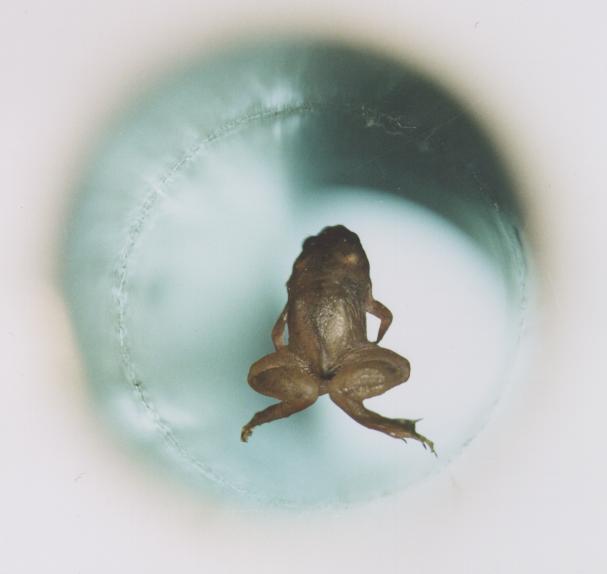
A weightless frog, floating in a magnetic field

Historically, IgNobel prizes have been awarded for rather obscure work, but real world applications have been found for discoveries that may seem merely interesting at first glance. A good example is a study that won the IgNobel prize in Biology showing that malaria mosquitoes (Anophelese gambiae) are equally attracted by the smell of Limburger cheese and human feet. Since then traps have been baited with Limburger cheese across Africa to help combat the epidemic of malaria. Another such example was in the field of Chemistry when the 2011 Chemistry IgNobel prize went to researchers who determined the ideal density of airborne wasabi to wake people up. The research has now been incorporated into some alarm systems to help wake deaf people in the case of an emergency.

On the other hand, some winners have produced work where it hard to find an application in the real world. This rather extensive list includes the 2008 IgNobel prize in Biology that was award to researches for discovering that fleas on dogs jump higher than fleas on cats. In another case a prize was awarded researchers from Scotland’s Rural College for their work on bovine behaviour. They found that cows that have been lying down longer are more likely to stand up soon, however once a cow has stood up it is much harder to predict when it will lie down again. Other cow related IgNobel prizes include one given to Newcastle University researchers who found that cows with names produced more milk than those without names, and one given to researchers who developed a method to extract vanilla flavour from cow dung. In this instance vanillin was extracted in a more cost efficient method than taking it from vanilla pods. This means if you want cheaper vanilla extract for your cakes, then look no further a field of cows!

With other winning pieces, if you really try, you might just be able to find some useful information. For example, unless you have rather stubborn sheep and are looking for the easiest floor to pull them across, I can’t see why a paper written by Australian scientists entitled "An analysis of the forces required to drag sheep over various surfaces” would be of any interest to you. Despite this, the paper still won the IgNobel prize in Physics in 2003.

Some prizes are award in jest to people you may not think deserve recognition for their work. One that falls into this category is the 2005 IgNobel award for literature, given to the ‘internet entrepreneurs of Nigeria’. You may know these people as the ‘lost relative’ scam artists, where an email will pop into your inbox from some distance relative explaining that they are in line to inherit a large sum of money. The catch is they need a small amount of cash to pay some legal fees and, if you are able to pay the fees, then you would be rewarded handsomely once they receive their money. Unfortunately the story is a fable, but the less savvy amongst us have sent money abroad in a hope of receiving part of the fortune anyway. The organisers of the IgNobel awards found that this fraud showed ingenuity and imagination, awarding the prize for literature to these con artists. Another controversial winner was the president of Belarus, Alexander Lukashenko, who won the IgNobel peace prize rather ironically, in 2013. He received the Ig Nobel award for decreeing that it would now be illegal to applaud in a public area and he shared the award with the Belarus state police department for arresting a one armed man for clapping in public.
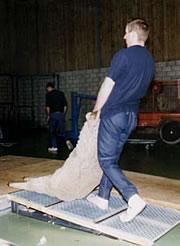
Sloping, slatted, wooden platforms are preferable for sheep dragging.
Sheep pulling over the preferred surface

The breadth of work that the prizes cover and the weirdness of some of the academic work complied here, I believe, is outstanding. I think it is also interesting how the IgNobel awards are also used to highlight questionable work, such as the distant relative scam and the odd laws that have been introduced in Belarus. If you have enjoyed this article I suggest you have a look at the rather extensive IgNobel award Wikipedia page. There are many more interesting winners that I have not been able to list here and I am certain many will ‘First making you laugh and then making you think’

All that is left to say is that I hope you are looking forward to the 2015 IgNobel prizes as eagerly as I am!


Friday, 14 March 2014

Weird and Wonderful: Pelican Spiders!


Scared of spiders? Well these tiny arachnids may only be a couple of millimetres in length but they have large jewel-like venom filled fangs which they use to stab their prey at such a fast speed that the victim is often left impaled. Fortunately these spiders are only found in Australia, Madagascar and South Africa and prey upon mainly small insects and spiders. They are often referred to as Pelican spiders due to their bizarre shape, which from certain angles can resemble that of the Pelican bird. A long elongated neck with a small rounded head on top, designed to support their long jaws.

These spiders tend not to build webs but creep through leaves and foliage where they can easily search out their prey. These spiders us their six hind limbs for walking and use their front two limbs to detect prey. Pelican spiders often seek out the silk trail of other spider species and tend to wait at the edge of a spider’s web until it can catch it. They will often trick the prey spider by plucking at the web so that the spider heads that way in search of its own prey. The Pelican spiders wait very patiently but attack with such speed that they are often referred to as the assassins of the spider world.

Check out this animation of the pelican spider's attack strategy 


*Photo by Paul Bertner

Wednesday, 30 October 2013

Trick or Trick? Halloween Creature Contenders

by Sam Matchette


Halloween. Even at the mention of it, I’m sure a good number of you are picturing a vast array of beasts, ghouls and monsters – or any other blood-sucking demon from hell. Entangled in this net of horror are a number of animals; all of which have developed a special, cult relationship with the day. For example, black cats, wolves, bats and spiders all receive the ‘Halloween treatment’ – mostly because they all seemingly do well in a witch broth or two. However, in true cliché breaking fashion, I am convinced that nature can offer a far more blood-curdling spectrum of unlikely beasts (in their own right) than stereo-typically portrayed. Let’s explore the often (and literally) over-looked contenders…

Surprisingly, the first is typically only an inch long, but will undoubtedly send shivers through at least half the people in the room. Native to the amazon basin, the Candiru Fish is a translucent, eel-like fish with catfish barbels at its anterior end. Parasitic by nature, Candirus follow the water flowing out of gill flaps of other larger fish. It then dives in and grasps to the inner layer of the gill cavity. Here, it can open up its sharp, umbrella-like spines to lock itself in position whilst vigorously suckling the host’s blood. Once full, they unhook and sink to the river floor to digest the meal - whilst eying the next passing blood bonanza. The Candiru fish is even also called the Vampire fish for this very reason. But, of course, this process isn’t limited to fish – brace yourselves. A suitable flow of liquid for the Candiru can include the flow of urine from an organism’s urethra. Thus, an unsuspecting tourist caught short on the amazon may well get a very, very nasty shock – allowing the fitting title of ‘willy fish’ to be adopted. Naturally, the pain is said to be indescribable. As far as Halloween costumes go, this may not make the obvious choice; for ‘Fright Factor’ however, the Candiru fish certainly has my vote.
Antlion 

Along a similar line as the Candiru fish, our next contender is exceptionally frightening when considered from the prey’s viewpoint. Winner of one of the coolest names in the animal kingdom, the Antlion (or Sand dragon) is exactly what it says on the tin; a golden-hair covered beetle-like insect that feeds on ants or other unsuspecting morsels. It is in fact the predatory larvae of the ‘antlion lacewing’, but has adopted its own title as ‘antlion’ due to its ability to remain in the larval form for many years. The antlion builds a self-built conical hole in very fine sand and waits patiently at its centre – picture George Lucas’ Great Pit of Carkoon. A careless slip into the hole leaves an insect doomed: fighting a far too literal uphill battle to escape the large grabbing mouth appendages of the antlion. Inevitably, exhaustion takes over and the insect is quickly speared and dragged alive into the sand, to be drained of its bodily fluids. This animal is not only scary in appearance, but also plans the world’s scariest surprise party - a Halloween must-have!

Horned 'Toad'
No Halloween beast can be without a gory element; whether it is being a blood-sucker, blood-covered or down-right bloody scary. This next organism, however, can go one step further. The Horned Toad is a small, squat lizard found in the arid lands of North America. The nickname of toad refers to its rounded body and stumped tail. However, unlike the toads in the traditional witch stories, this ‘toad’ won’t be boiled so easily. As a very last resort of predator-defence, this lizard reveals its dark side; by restricting the blood leaving the head, blood pressure builds to such an extent that the blood vessels surrounding the eyes burst. A remarkably accurate blood stream then erupts from the corner of the eye and can travel up to five feet. Being acrid tasting (and just plain messy), the predator understandably reels giving the lizard time to escape. Re-enacting this gory trauma would definitely be a winner – needing only a squeezy bottle of ketchup and very understanding friends.

Alternatively, some other organisms choose another anti-predator defence: toxins. However, the culprits are not who you would expect. The Pitohui, Little Shrikethrush and the Blue-Capped Ifrita - all originating from New Guinea – are the only known genera of bird that are poisonous. The said toxins are batrachotoxins: obtained from Chloresine beetles that make up part of their insectivorous diet. They make look like innocent songbirds, but these birds pack a punch – just handling them bare-handed can cause numbness and tingling. That’s frightening enough, let alone imagining the state a poor predator would be in after slipping one of these in to its mouth.

Ichnuemon Wasp
The last organism could be the worst of the bunch. Famously despised by Charles Darwin himself, the Ichnuemon Wasp family are renowned for their torturously wicked ways. Targeting primarily larvae or pupa, the adult female will inject (using a very long, sharp ovipositor) her eggs in to a host body – they have even been known to drill through wood known to be sheltering located larvae. As well as the eggs, the adult also delivers a toxin leaving the host larvae paralyzed. Unfortunately for the larvae, from this point on, it is quite spectacularly doomed. The eggs inevitably hatch within the larvae and begin to eat; and eat and eat. Starting with the non-essentials; fat cells, muscle cells and non-vital organs, the wasp larvae aim to keep the host larvae alive for as long as possible. Yes, you read right: the host larvae, kept fresh and alive by the paralyzing toxin, get literally eaten alive from the inside-out. It’s no wonder really where the inspiration for Ridley Scott’s Alien came from. The seemingly agonizing ordeal for the host larvae ends with the wasp larvae consuming the vital organs; and then erupting out of the husk to spread more joy elsewhere. Undoubtedly, the ichneumon wasp would make an excellent fear bringing Halloween hero, but regretfully do not win the ‘best-way-to-bring-up-offspring’ award.

These were just a handful of organisms, from many conceived by nature, with a horror story that I believed was worthy of ‘Halloween treatment’. So if you’re looking for inspiration for this year’s Halloween costume or party, just remember these gruesome mercenaries and the nasty ‘tricks’ that they have up their sleeves. You may just fancy a ‘treat’ instead.

Saturday, 19 October 2013

Weird and Wonderful: Hidden Horrors Returns!

Check out these awesome images of tiny creatures under the microscope.

Zebra fish embryo

Locust

Tadpole

Spiny Assassin Bug

Velvet mite

Butterfly
Processionary moth caterpillar

Monday, 14 October 2013

Weird and Wonderful: A Bioluminescent Bloom!

by Danny Stubbs


You may think the vibrant blue shown in the photo above is part of a scene from Avatar or Tron, but it is in fact naturally sourced.  Some organisms are able to produce light and these are said to be bioluminescent. Bioluminescence has many valuable functions within the animal kingdom, such as illumination, distraction, warning, mimicry and attraction.

A spectacular example of this emission of light is in coastal areas when there are mass accumulations of plankton. The colour is produced by an enzyme called luciferase and a pigment called luciferin. Oxygen in the shallow marine environment reacts with luciferin and luciferase acts as a catalyst during the process. Oxyluciferin is produced in an electronically excited state and in returning to its ground state it emits a photon of light.

The glow is completely harmless to humans, and can prove quite entertaining as the following video shows. Here the surface is being disturbed, prompting the algae to give off their iridescent blue glow.


Friday, 10 May 2013

Weird and Wonderful: Hidden Horrors

Check out these awesome images of tiny creatures under the microscope.

----- Hydrothermal worm -----
----- Maggot -----
----- Swollen tick -----
----- Wasp -----

----- Caterpillar -----

Wednesday, 6 March 2013

Weird and Wonderful: The Immortal Jellyfish


Chris Turner


You’re growing old, fragile and, perhaps worst of all, wrinkly. If only you could go back to being a baby, and grow up all over again. This might sound like a curious fantasy but for one member of the animal kingdom it’s just part of life.

Turritopsis nutricula is the Immortal Jellyfish. As a member of the Hydrozoa class, it has two stages within its life cycle: the polypois and medusoid stages. In polyp form these jellyfish are grouped together in colonies, with several polyps connected in a tree-like manner by a series of tubes called hydrocauli. These polyps are little more than mouths, terrifying mouths covered in vicious, stinging tentacles. It’s certainly comforting to know they’re less than one millimetre tall. The medusa stage is the larger, sexually mature form sizing up to a slightly underwhelming 4.5 mm. It’s a more conventional jellyfish shape with around 100 stinging tentacles trailing below a bright red stomach.

Unlike all other Hydrozoans, the transformation from polyp to medusa isn’t a one way street for Turritapsis. When conditions are unfavourable the jellyfish is able to use cells from certain tissues to revert back, with its bell and tentacles deteriorating in exchange for hydrocauli. This ability to reverse metamorphose means that the jellyfish is biologically immortal. With this extraordinary trait it isn’t much of a surprise to hear that this species is quickly spreading across the oceans. According to Dr Maria Miglietta of the Smithsonian Tropical Marine Institute we’re seeing ‘a worldwide silent invasion’. Let’s hope they don’t get much bigger.

Did you know Synapse featured The Immortal Jellyfish in issue 3 of our print magazine? It made it onto the front cover!

Wednesday, 20 February 2013

Weird and Wonderful: Tachyglossus - The Real Easter Bunny

Ione Bingley

Rumor has it that a bouncing bunny bestows his tasty eggs upon hoards of hungry young humans. Call me a cynic, but where is this reputed Lenten rabbit getting his endless supply of eggs? Surely Thumper must be Big Bird in disguise, everyone knows mammals never lay eggs…or do they?!

This time friends we are heading out for a jaunt down under, under down under, to the Australian undergrowth, where a certain prickly customer snuffles out his creepy crawly quarry. This spiny insectivore may look to the untrained eye like our familiar British bonfire-lover, but we must remember, looks aren't everything. I have the pleasure of introducing you to the Echidna (eh-kid-na), and though she doesn't like to show her face, preferring you to ponder her spiny rear-end, I promise she is most fascinating indeed.


The echidna is larger than the European hedgehog and if you’re lucky enough to glimpse its cigar-like snout you will see it’s actually rather different in structure. With no hinge and a lower jaw that is reduced to a couple of bumps the echidna is already rather peculiar, and this is before mentioning its penis that has 4 openings! Like any other member of the Mammalia class, the echidna is warm blooded, suckles its young and has fur, albeit hardened into spines. However, unlike any other mammals, apart from their sole compatriot of the Monotreme contingent, the duck-billed platypus, Mrs Echidna lays eggs! 

The echidna is not some kind of bird-mammal Frankenmonster. It may actually elucidate the evolutionary link between the mammal-like reptiles (therapsids) and our furry friends of today, including Homo sap himself. The echidna lays eggs, has reptile like shoulder bones, a venomous spur, doesn't pant or sweat and, though warm-blooded, has a body temperature of 31-33°C, the lowest functioning temperature of any of our Mammalian brothers; could the echidna be warming up from a reptilian state?

Winter is the time for lonely hearts in the land of the echidna with up to 11 males following one female in a love train seeking her affection. One egg is laid every 3 years and the baby echidna hatches, after 10 days of eggdom, a mere 0.3g with closed nostrils. It is so altricial that gas exchange occurs directly across the skin surface. Unlike kangaroos and wombats, there is no pouch for the babies to hide in; they have to cling on for dear life with their tiny front feet with the mothers’ belly skin forming a ‘pseudopouch’ for support. 120 miniscule pores exude milk for the teeny echidnas hat becomes progressively thicker and more nutritious. After 5 or 6 days the nostrils open and after 35 days the babes are covered in peach-like fuzz. By 50 days it’s ‘on your own two feet chid’ and the mother digs a nursery burrow up to 2m long returning for only 2 hours every 5 days. The ‘puggles’ as they are affectionately known at this teenage stage, are able to consume up to 30% of their body weight in one feed, blowing up like a balloon. That milk must be real nutritious stuff because after seven months they’re off, the adventurous young’uns, travelling up to 40km.      

It’s no wonder we’ve never seen the famed Easter Bunny, we’ve been looking in all the wrong places. Why do you think he always hides his eggs in the undergrowth? Check out the video below.

Tuesday, 12 February 2013

Weird and Wonderful: Louisiana pancake batfish

Tom Stubbs


The Louisiana pancake batfish (Halieutichthys intermedius) is a strange-looking fish with a massive head, round flat body and limb-like pectoral fins. These pectoral fins are used to ‘walk’ along the sea floor. The pancake batfish attracts prey with a fleshy ‘lure’ on its snout. This bottom-dwelling fish species was only discovered in 2010 and it is restricted to the northern Gulf of Mexico. Happy Pancake Day!

Wednesday, 16 January 2013

Weird and Wonderful: The Hooker's Lips plant


Meet Psychotria elata, also known as the ‘hooker’s lips’, ‘hot Lips’ and even ‘Mick Jagger’s lips’ plant. This is not fake, it is a genine plant that can be found in the understory of tropical forests in places such as Costa Rica and Colombia. The vibrant colourful red flowers attract pollinators, including hummingbirds and butterflies. P. Elata acts as a host plant for the golden silkmoth (Xlophanes adalia).

Monday, 3 December 2012

Weird and Wonderful: Ladybird Mimic Spider, another real life Pokémon!

Tom Stubbs 


Meet Paraplectana duodecimmaculata, nicknamed the Ladybird Mimic Spider (or Ladybug Mimic Spider to our American friends). Despite belonging to the same group as tarantulas and black widows, this cute little critter looks just like a ladybird! In addition to resembling a ladybird this spider is also reminiscent of the Pokémon Parasect, from back in the day! Why, you ask, would a spider, that most people find scary, chose to look like a ladybird that is not associated with such fear. Well in the animal kingdom the bright colouration and spots of a ladybird represent a warning sign; they are what is termed aposematic. This visual warning system is designed to discourage predation by informing any potential trouble makers that the animal is not edible. In the case of the ladybird, they are filled to the brim with toxic and foul-tasting alkaloids. By mimicking the ladybird, the edible spider is using this colour system to avoid predators, this is known as Batesian mimicry. Intriguingly this spider is not alone in mimicking the ladybird, you also find other edible beetles using their colour patterns.

The ladybird mimicking beetle (right) has adopted the same tactic as the spider (left)

Wednesday, 31 October 2012

Weird and Wonderful Halloween Special Part 3: Zombie Fungus

Ione Bingley


Breaking news: ZOMBIES exist! Zombie ants have recently been identified under the mind control of the parasotoid fungus, Ophiocordyceps unilateralis. This is truly the stuff of nightmares, the newly discovered fungus is found in the rainforests of Thailand where is survives by infecting and controlling the minds of carpenter ants. 

However bizarre this may sound, it is in fact no Halloween trick. The evil fungus sits, poised in wait, in the form of millions of microscopic spores dispersed by a mature fungus into the shadowy forest undergrowth. An unlucky carpenter ant wandering through the wrong part of the jungle becomes a welcome victim to the plotting parasite. The fungal spores stick to the carpenter ant’s body and begin to burn through its exoskeleton via the secretion of a powerful catabolic enzyme. The cursed ant continues for two days blissfully unaware of the parasite’s malicious existence; suddenly it cannot help but to obey a powerful impulse to leave the safety of its colony high in the leafy bowers and travel down to the shady underworld a foot above the forest floor where the humidity and temperature are optimal for fungal growth. The zombie-ant, now totally at the mercy of the parasite’s mind control, stumbles to the underside of a leaf, bites into the main vein, irreversibly anchoring itself to the spot, and there silently, resigned to its fate, it dies.

The fungus, however, has not finished with the ill-fated, formic creature. Using the ant’s hard exoskeleton as a refuge, it proceeds to devour its internal organs. Once satiated on its macabre meal, the tentacular main stem of the fungus erupts through the back of the ant’s head, releasing thousands of microspores onto the forest floor, and creating a 10-square foot ‘killing zone’ below the remains of its feast. A treacherous trap is set for the next unfortunate victim. Spooooky stuff….

How to make a zombie ant - David P. Hughes - Harvard University

Check out this gruesome video:


That wraps up Synapse's Halloween special, hope you enjoyed the ride!

Tuesday, 30 October 2012

Weird and Wonderful Halloween Special Part 2: The Deep-Sea Devil

Ione Bingley


As we continue on with our travels down to the deepest, darkest corners of the watery underworld, we might chance upon this gruesome spectacle. No, he didn't get lost on the way to the Prometheus auditions; this terrible creature isn't just a figment of nightmares. It is, in fact, a bona fide species of deep sea fish, rarely seen less than 500m below sea level, preferring to skulk at 1km or more under the waves. It is certainly diabolical in appearance; scaleless, paper-thin black skin, giant eyes, and huge jaws with a set of razor sharp teeth. The first specimen was presented to William Orville Ayres of the Boston Society of Natural History in 1848. Will named the species Malacosteus niger (meaning soft boned and black), claiming its bones are so soft that they "can be pierced even in their hardest parts by a needle with the greatest ease". 


Although utterly monstrous to look at, the black dragonfish grows only to a mere 25cm! Do not, however, be fooled by his mediocre size, Mr Malacosteus has some pretty sneaky hunting tricks up his sleeve. He is able to hinge his head backwards at the neck allowing the lower jaw to shoot out and impale little fishies on needle-like fangs. The jaw is then withdrawn delivering his victims right into the throat via pharyngeal teeth found in the neck. 

His devilish bad looks are augmented by the presence of two large photophores, light organs, located below (suborbital) and behind (postorbital) the eyes. The postorbital photopore uses a chemical called luciferin (in keeping with the satanic theme) to emit blue light at a wavelength of 460-490nm, perfect for penetrating the dingy depths. The suborbital photopore glows red light using a protein that absorbs the blue light and emits light at a greater wavelength appearing red. M. niger uses chemicals absorbed from unlucky copepods on the menu, to enable him to see red. 

Beware divers of tomorrow of a benthic beast with flaming scarlet eyes and jagged jaws, for he is seeing red and you might be his next victim….. mwah ha ha ha


Monday, 29 October 2012

Weird and Wonderful Halloween Special Part 1: Ghosts of the Deep

Ione Bingley


Dive with me to the underworld, 3000m below the bone-chilling Antarctic Ocean, it is pitch black, and the water is below 5°C. The icy gloom is broken by a rippling nimbus of light gliding towards you, a seeming ghoulish globe of otherworldly ectoplasm. This, my friend, is just one of the many ghostly forms that the members of the Ctenophore phylum take, also known as ‘comb jellies’. They skulk in the corners of every inhospitable deep sea, stalking their unfortunate prey. The comb jelly may look like a divine messenger, but is, in fact, one of the most sinister, voracious, and destructive of the planktonic organisms.

Although these trippy Ctenophores may look like jellyfish, do not be fooled, they lack toxins and cnidocytes (explosive cells containing toxin), their weapon of choice is the colloblast. The epidermis of the Ctenophore tentacles are covered with these colloblasts, containing a super-sticky adhesive held in granules, poised for rupture on contact with their prey. Their ill-fated planktonic victims become irredeemably entangled only to be unmercifully digested with a wipe of the trapping tentacle across their captor’s mouth.

Along the bilaterally symmetrical blob of the Ctenophore are 8 evenly spaced rows of ciliary combs, covered by thousands of cilia (little hairs) which propel the glittering ghoul, making it the largest organism to move in this way. The ghostly glow of the Ctenophore comes from the production of biochemical light from canals under the comb rows and the rippling cilia produce the glimmering effect. The bioluminescent flashes are brighter than in any other organism and the colour changes with temperature… Cterrifying stuff!

Saturday, 27 October 2012

Weird and Wonderful: Bagheera kiplingi, the vegetarian spider

Jessica Towne


Around 40,000 species of spider have been discovered so far, and all of them were considered to be carnivorous. That is, until one of them was found to survive on an almost entirely vegetarian diet. Bagheera kiplingi, a jumping spider named after the panther in The Jungle Book and his creator, Rudyard Kipling, is found throughout Central America. The spider was named in the late 1800’s from a single dead specimen, and nothing was known of what it might eat.

However, between 2001 and 2008, Christopher Meehan of Villanova University and Eric Olson of Brandeis University independently studied the spider in Mexico and Costa Rica. Their report on the subject was published in Current Biology on 13th October 2009. Until then, the only examples of spiders consuming vegetation were the occasional pollen and nectar eating habits of a few species. They discovered that B. kiplingi lives only on acacia trees, which are also inhabited by ants. These ants have a symbiotic relationship with the trees, as the ants defend the plant from large herbivores, and are rewarded with food and shelter in the form of hollow thorns. The acacias produce nutrient rich nodules on the leaves called Beltian bodies, and these are what both the ants and spiders are after. B. kiplingi was observed “hunting” the Beltian bodies, using the techniques other jumping spiders would use to hunt live prey. Jumping spiders are well known for their acute eyesight, speed, and as their name suggests, jumping abilities. The ants aren’t keen on having the spiders around, so the spiders tend to stay on older leaves where the ants aren’t on patrol. B. kiplingi uses its agility to avoid the ants and grab all the Beltian bodies it can. In fact, the spiders have been observed using several different methods for avoiding the ants, which demonstrates the incredible cognitive abilities that all jumping spiders share. For example, the spiders will hang from a thread of silk until the ants pass, or simply leap away from danger. It has also been suggested that the spiders may also mimic the ants’ appearance and movements, which may be why their remarkable lifestyle has remained a secret for so long.


B. kiplingi is not a strict vegetarian, however. They have been observed preying on ant larvae and other small invertebrates, although in the case of the Mexican population, this only accounts for around 9% of their diet. Meehan’s and Olson’s findings were confirmed by looking at the nitrogen content of the spiders’ bodies, which tends to be higher in carnivores than in herbivores. The ratios of the isotopes N-14 and N-15 were analysed, and it was found that B. kiplingi had 5% less N-15 than other species of jumping spider.

The next mystery to be solved is how the spiders digest the Beltian bodies. Spiders digest their food externally, so solid food must be quickly broken down before it can be eaten. Beltian bodies are about 80% fibre, so how B. kiplingi manages to eat the stuff is unclear. This may mean that the spiders’ digestive systems have become specially adapted to eating vegetation. A final observation by Meehan and Olson is that mutual relationships, such as between the ants and acacias can affect, and be exploited by, other organisms. In this case, the ant-acacia relationship is exploited by the vegetarian jumping spider.


Check out B. kiplingi in action in this video