Showing posts with label Articles. Show all posts

Sunday, 10 August 2014

Tortoises master the tablet

by Daisy Dunne

A team of tortoises from the University of Lincoln have successfully learnt to use touchscreen technology to win treats from scientists, who hope to learn more about the reptile's unique method of processing spatial navigation. Whilst mammals use the hippocampus for matters of geography, reptiles are thought to use a similar enigmatic structure known as the reptilian medial cortex.

"Tortoises are perfect to study as they are considered largely unchanged from when they roamed the world millions of years ago,” says Anna Wilkinson, who trained the tortoises using strawberry rewards, “this research is important so we can better understand the evolution of the brain and the evolution of cognition."

Impressively, two of the tortoises even went on to use the information they had learnt in a real life scenario. After learning to peck blue circles on one side of a screen in exchange for a reward, the reptiles chose to approach the same side of an experimental chamber when presented with two empty blue bowls similar to the virtual circles.

This outcome suggests that like the majority of animals, reptiles rely on 'landmarks', and not just simple motor processing, to orientate in their environment. Wilkinson hopes this study will open the door for a wider adoption of touchscreens in animal behavioural studies.

“The touchscreen is a brilliant solution as all animals can interact with it, whether it is with a paw, nose or beak. This allows us to compare the different cognitive capabilities", she says.


Tuesday, 11 March 2014

HAARP: Weather Weapon or a Load of Hot Air?

by James Ormiston 

The HAARP Hype
A month-or-so ago the internet was abuzz with debates, videos and general head scratching concerning snow in America that apparently does not melt. Youtube quickly filled with videos of people taking lighters and blowtorches to samples of this so-called “plastic snow”, with all manner of theories attempting to explain the phenomenon. In the end the actual explanation was a simple misunderstanding of the properties of snow and how people were trying to melt it, but this did not stop one of the most vocal communities on the internet voicing their own interpretation of the situation: conspiracy theorists. The usual claims were made: that the snow was made by the government through chemtrails, that the snow contained chemicals and mind control agents to suppress the population and so on. One of the theories concerned a scientific facility which in the past few years has been blamed for almost every major climatic and seismic disaster on the planet. The facility in question is HAARP, an atmospheric research station in Alaska. According to many conspiracy theorists, the American government is using it as a “weather weapon”, capable of manipulating the weather and triggering earthquakes to harm people and countries that disagree with them.

"A "sky-punch" cloud, one of many rare but relatively well understood atmospheric phenomena often misidentified as being caused by HAARP."
There are entire YouTube channels devoted to documenting HAARP’s alleged effects and almost all of them involve abnormal clouds, lights in the sky and general out-of-the-ordinary atmospheric occurrences. It is worth noting, however, that practically none of the followers of the HAARP conspiracy are climate scientists. So why do people believe that HAARP is the cause of the world’s current climatic woes as opposed to something like climate change? One major reason that people distrust the work done at the HAARP facility is that it was built for atmospheric manipulation. This is true; the entire project was designed specifically for just that, but not at all in a way that would affect the weather...

The Numbers of HAARP
Let’s go through the facts of what HAARP actually is. HAARP stands for High-frequency Active Auroral Research Program. It is a scientific research facility based in a remote region of Alaska easily accessed on the Tok Highway. The facility consists of a 30 acre radio antenna array with a maximum transmission power of 3600 kilowatts at frequencies of 2.3-10 kilohertz. The facility is used by several major American universities. Its purpose is relatively simple: to stimulate and heat small portions of the ionosphere to investigate how it affects, among other things, radio communication.


HAARP radio antenna array
The array transmits a high frequency signal directly upwards over the facility which fans out as it travels higher through the air, passing straight through lower layers of the atmosphere without effect. Some of the signal is absorbed by the ionosphere whilst some is reflected back to Earth or continues into space. The signal absorbed by the ionosphere has an intensity of 3 microwatts per cm2. To put this value into perspective, the Sun constantly bombards Earth with electromagnetic radiation thousands of times greater. In fact, the intensity of HAARP’s transmission is hundreds of times weaker than the variations in UV input from the Sun that forms the ionosphere in the first place. 

One of HAARP’s major achievements was the production of very small artificial aurorae (the same atmospheric phenomenon as the Northern Lights) using this method. The aurorae produced were so weak however that the human eye would not detect them and so the facility relies on highly sensitive electronic monitoring equipment to analyse experiments, hence its remote location away from populated areas plagued with electric noise. 

Man-made HAARP aurora
HAARP only stimulates the ionosphere, not the troposphere (where our weather occurs), and thus has a negligible, if any, effect on the climate as the distance and differences in composition between these atmospheric layers are too great. Even in the ionosphere, HAARP is not powerful enough to do anything significant. The fact that natural aurorae can be seen with the naked eye whilst weak HAARP aurorae cannot be detected without electrical instruments is evidence for this without needing to consult atmospheric physics literature. If stimulating the ionosphere in such a manner resulted in dramatic weather changes, the vast solar/extra-terrestrial input of energy experienced every day would cause constant cataclysmic weather events. The “science” behind HAARP’s supposed abilities just doesn't add up.

Earth-shattering Claims
The story doesn’t end there though. Further claims blamed HAARP for the Japanese earthquake and tsunami of 2011 as well as the Boxing Day tsunami the decade before. This claim is more outlandish than suggesting HAARP affects the weather as earthquakes are said to be triggered this way by “heating moisture in the atmosphere like a microwave”. Firstly, there is no correlation between atmospheric temperature and seismic disturbance. Secondly, supposed evidence of HAARP being to blame includes the fact that increased background radioactivity is observed before and after earthquakes. The problem with this is that electromagnetic radiation and radioactive decay are two quite different things. HAARP uses radio waves, which are electromagnetic, whilst radioactivity is derived from decay of radioactive isotopes of elements in the Earth’s interior, which is released when rocks in the Earth’s crust are bent and broken during seismic events.

The Politics
So what can conspiracy theorists say to suggest HAARP is genuinely suspicious? Well, HAARP conspiracy theorists often cite the investors behind the project as evidence. The two major investors were DARPA (Defence Advanced Research Projects Agency) and ARCO (Atlantic Richfield Company). As a defence agency, anything funded by DARPA is treated by some as suspicious, and HAARP was no exception. ARCO was a major American gas company and employment source in Alaska at the time, looking to invest in HAARP so they could sell the gas needed to power the project’s arrays. Dr Bernard Eustland, a renowned physicist, was even employed by APTI, a specially set up subdivision of ARCO, to gain backing. Overall, it was a clever business move. DARPA’s interest was solely in the potential for improving military communication with HAARP’s radio wave research. This is why no patents were filed for the use of the facility as a weapon: because it is incapable of such functions. 

The Disappointing Truth
Regardless of the politics behind HAARP, the biggest criticism to conspiracy theorists is that it simply isn’t capable of meeting their claims. In sum, the “science” just doesn't add up. Adding a tiny drop to the ocean of energy in the ionosphere on one side of the world cannot cause earthquakes and typhoons with GPS-level precision on the other. As put by computer scientist David Naiditch: "(HAARP is) a magnet for conspiracy theorists...its purpose seems deeply mysterious to the scientifically uninformed.” Even if the rumours about HAARP were true, the so-called “plastic snow” observed in America can’t be the result of its weather modification for one important reason…the facility was officially shut down last year!

Saturday, 8 March 2014

Royal Society Wikipedia Editathon Celebrates Diversity in Science

by Julie Lee

On the 4th of March, I attended an event known as an ‘editathon’. This particular event gathered women in order to encourage them to contribute to Wikipedia. It was hosted by The Royal Society in London, in advance of International Women’s Day (today - 8th March). Among other reasons, the editathon was organised to increase the quality and quantity of articles on female scientists on Wikipedia. In addition, the event hoped to encourage women to be longer-term editors of Wikipedia.

The editathon took place over half a day, with an afternoon and an evening session. In the afternoon, Dame Athene Donald, fellow of the Royal Society and professor of physics at the University of Cambridge, provided a thought-provoking talk on diversity in science. In all other respects it was identical to the evening session, which I attended.

The event was led by John Byrne, Royal Society Wikimedian-in-residence, former Treasurer and trustee of Wikimedia UK, and 2012 ‘UK Wikimedian of the year’. Byrne gave a presentation introducing himself, Wikipedia, and good practice when editing. Additionally, his talk highlighted some problems in Wikipedia which the editathon endeavoured to fix - namely, the lack of female editors in Wikipedia (reports estimate about 9%) and the lack of quality articles on female scientists. These problems are likely linked and, further, contribute to the low public profile of esteemed female scientists. 

During the event, a group of 15-20 women worked on their laptops to help those problems, while expert Wikipedia editors roamed the room, providing advice as needed. We were encouraged to start our own articles on prominent women scientists - such as those featured by Discover Magazine. A few of us had some Wikipedia experience; however, most attendees were completely new to the game. By the end of the night, we came away with an enriched understanding of Wikipedia, better skills in editing, and a sense of accomplishment. While some critics may claim that the relative infrequency of good Wikipedia articles on female scientists is due to a simple lack of good female scientists, the event certainly challenged that view. The women we wrote about had held various directorial and professorial roles. 

Another problem Byrne described was that, in recent years, the public understanding of Wikipedia as a resource that anyone can edit has diminished. At the end, the event’s Wikipedia page showed several new articles had been made, in the span of only a couple hours. So, the event hopefully illustrated that anyone with a laptop and something to contribute can create meaningful resources for others to explore. In particular, scientists tend to grasp good editing principles right off the bat. I chatted to one of the Wikipedia volunteers, who noted that scientists are usually quick to understand why and when to cite articles - an invaluable part of making Wikipedia credible.

For those Wikipedia sceptics out there: yes, it is really easy to edit Wikipedia. Yes, there sometimes may be inaccuracies. However, Wikipedia is all about crowdsourcing, and within minutes most vandalism disappears. The editors on the wiki work tirelessly, on their own time, to make it great. So, before you criticise Wikipedia, think about how amazing it is that people around the world came together to make a highly-valued resource that print encyclopedias can only dream of. 

All in all, it was an enjoyable evening spent meeting other women and learning about the inner workings of Wikipedia. I would encourage people to visit the Wikipedia event page to examine the fruits of our labour: click here

Lastly, feel free to dive in and do some editing yourself! After all, that is the appeal of Wikipedia. 

Monday, 24 February 2014

Liquid crystals: revolutionary science

by Toby Benham

Once a scientific curiosity on the fringes of scientific research, the liquid crystal industry is now estimated to be worth around £56 billion. They are essential to everyday items such as mobile phones, laptops and televisions in creating liquid crystal displays (LCD). Although the UK doesn't profit largely from the industry, all these technologies can be accredited to the breakthrough made by the late British Professor George Gray of Hull University and the research his team conducted in the 1970s.

Originally shunned financial support for his research, it was the minister for technology, John Stonehouse, who initiated the advance in the field. He wanted a technology to replace the expensive cathode ray tubes causing a hole in the Ministry of Defence's budget in producing flat screen colour displays. Liquid crystals were known but little appreciated. They can be described as anisotropic molecules with long range orientational order and some degree of liquid like order. In other words they possess crystalline structure while still maintaining the ability to flow like a fluid in certain directions. This means that they interact with light differently in different directions due to differences in polarisability. The main reason that they are so useful is because applying an electric field can lead to a switch in alignment of the crystal. This feature can be exploited to display different colours when different voltages are applied.

By 1973, Gray and his team had been  able to exploit this, having synthesised a new class of liquid crystals called cyanobiphenyls which were stable, yet still “flippable”. The first liquid crystal devices appeared the following year and Gray became a Professor of Organic Chemistry. Described as a brilliant teacher, most of his students went on to leading positions in industry and academe.

He was appointed CBE in 1991, but his favourite prize was reportedly having a train named in his honour. Gray never won the Nobel Prize and is little known but should be remembered as a British great who contributed much not only to his field of science but to modern day life. Liquid crystals are of great use with so many applications and the field is in constant development of what Gray started. 

Wednesday, 19 February 2014

Whale spotting from space

How many whales exist in our oceans? Land based methods of counting whales can require trained researchers spending hours of their time recording numbers and this can be costly and inefficient. Now high resolution satellite imagery has been used in an attempt to count whale numbers from space.  Peter Fretwell and colleagues counted Southern right whales in part of the Golfo Nuevo in Argentina. It appears certain species of whale may be easy to locate from space making this a perfect technique.  This will help us gain important information about prey populations and their marine ecosystem. Hopefully this new technique can now be used for various whale species to give an accurate prediction of numbers.

More information

Saturday, 15 February 2014

Kings of the New World (2): The Green Anaconda

by Rob Cooper

In the modern world snakes are often associated with malice and deception relating back to figures such as the snake from the Garden of Eden and the Medusa slain by Perseus in Greek mythology. But is this reputation deserved? After all, in many lesser exposed cultures, such as those of ancient Egyptians, snakes are esteemed symbols of nature, power and worship and many modern cultures still worship snakes to this day. Perhaps the most infamous of all snakes is the Green Anaconda for its enormous size and power. In this article I will analyse if its malign reputation is well deserved.


The Green Anaconda is generally considered to be the heaviest snake in the world. Whilst the reticulated python can reach 7.5 meters in length a 5 meter anaconda would still outweigh the python.  Anacondas show a large degree of difference in size between the sexes (sexual dimorphism) and the largest individual ever officially measured was a female 521cm long and 97.5kg in weight. It has been estimated that female anacondas have a maximum length of 6.7 meters before they can no longer reproduce. However there are numerous tales of titanic snakes stretching to lengths of 12 meters have been described by travellers. Although it is telling that a $50,000 dollar prize for a snake over 9.1 meters in length is as of yet unclaimed. 

Female anaconda alongside male, showing sexual-dimorphism
Anacondas show remarkable growth over their thirty year life spans and the average adult is 500 times larger than it was as a hatchling. To put that into context the average human new born is 3.4kg making the average adult 1.7 tonnes… If we followed the growth pattern of anacondas, which we fortunately do not. Anaconda mating also brings us to a rather sinister tendency of females to cannibalise males. Even more harrowing (for a male anaconda) is that most cases have shown that the female had recently finished breeding leading to an unsettling hypothesis that opportunistic females cannibalise their mate in order to supply nutrients for the development of the embryo. 

Much like the Jaguar, the anaconda is very at home in water and has both its eyes and nostrils situated on the top of its head allowing it to breathe and see its prey whilst remaining underwater. Belaying their sluggish nature on land anacondas are very strong swimmers although they are often known to drift down faster flowing rivers and swim to the side once they have found a favourable locations. The anaconda eats any species that it can restrain and commonly predates on smaller caiman species, deer, capybara, dogs, sheep, tapir and even Jaguar and humans on occasion, although attacks on humans are very rare. Like all snakes their metabolism is remarkably slow and they can often go one or two months between meals. The record is held by a captive anaconda that didn't eat for an entire two years. 


A member of the boa family (and often known as ‘the water boa’) the anaconda shares a typical attack style with the other members of the family. Firstly the snake latches its jaw onto the prey item in order to pin it between over 100 razor sharp recurved teeth which point back into the snake’s throat keenly preventing the animal from escaping. The snake then wraps first one, then two coils around the prey item. In a nightmarish turn, every time the prey item breathes out the coils tighten making it harder and harder to breathe. An adult anaconda is capable of squeezing with around 65,000 Pascal’s of pressure which is roughly equivalent to having a single decker bus being supported by the human chest (if we assume humans as the prey item in question). This, it hardly needs saying, is rather impressive for any animal, let alone one that is relatively small. The force that the enormous titanaboa (extinct snake, estimated at over a tonne in weight) could have exerted hardly bears thinking about. 

Documented attacks of anaconda on humans are rather rare which is perhaps due to low population density in areas were anacondas are common and their habit of hunting nocturnally in the water which limits the human contact they receive. However there are several recorded attacks on field researchers. These attacks also seem to be predatory as the snakes are not disturbed prior to the attacks and were known to follow the target for several meters still submerged and so able to make a safe escape. It is also often the case that large disturbed snakes are often docile and rarely try to bite even when handled, although they will resist when being restrained and moved. The snakes also seem picky with targets, so far the only recorded attacks have been on smaller individuals who fall inside the weight range of anaconda prey and larger individuals have been ignored possibly due to being too large for the anaconda to swallow. All documented attacks have also occurred in areas that are seldom travelled by people. 

This suggests that the anaconda seems to have no fear of predating on people, which a trait uncommon to most mammalian predators yet strangely manifested in some reptilian predators such as crocodilians. Does this suggest that the anaconda is the monster that it is made out to be by the numerous horror films snakes feature in? I would maintain not. The anaconda is simply a generalist and humans, which it encounters rarely, which happen to fall within its prey size range are simply a good way of recovering the energy deficit inflicted by giving birth or from long periods of starvation. 

The anaconda is a remarkable and terrifying creature but should it not be the goal of man to be able to look past simple emotional reactions and remember that, whilst intimidating, the anaconda has a majesty all of its own and is an animal just like any other and if any form of right to life exists the anaconda is just as deserving as we are.

Thursday, 13 February 2014

Dementia: is a cure around the corner?

by Jonathan Smith

Amidst regular breaking news stories of promising developments in the fight against dementia, we’re still no closer to being able to stop its progression. The company that finds a cure for dementia would not only start a revolution in treatments, but also make huge profits doing so. If this is the case, then why are we still waiting for effective treatments after decades of research into this oppressive disease? 

Prevalence and treatments for dementia

It’s no secret that dementia is a widespread condition. According to the Alzheimer’s Society, the established prevalence of dementia for 70-79 years is 1 in 25. For those over 80, the rate soars to 1 in 6. Considering the colossal cost to healthcare systems worldwide, the potential benefits of finding an effective treatment far outweigh the cost of making it. However, the current treatments available for dementia are minimal. Drugs such as Donepezil, Galantamine and Memantine serve to temporarily reduce the cognitive impairment caused by Alzheimer’s Disease, but do not target the pathology directly. This means that the more advanced cases eventually cease responding to treatment altogether. The brain tissue is just too damaged to salvage by then. What is desperately needed is a treatment that can actually alter the disease itself, resulting in a slower or even halted progression.

It’s not as if pharmaceutical companies haven’t been trying to find disease-modifying treatments of course. Last year the drug Semagecestat failed a massive clinical trial in Alzheimer’s Disease patients. It turned out that patients actually got worse with the drug! In the same year, the catchily-named drug LY2886721 was withdrawn from development due to abnormal liver tests in some trial patients. And failures are costly in the pharmaceutical business. Getting a drug to market can cost millions of pounds and can take over a decade for a company. Thus in the UK at least, industrial research into dementia treatments is getting less funding than ever. This still leaves the question: Why have the drugs failed to work? 

Understanding the neuropathology in dementia

The only simple answer so far is that, being a neurological disease, dementia is an extremely complex puzzle to unravel. Take Alzheimer’s Disease for example. A popular hypothesis of its origin is called the Amyloid Cascade Hypothesis. This suggests that the protein Amyloid-beta starts to get produced abnormally in the brain and clumps together outside cells, gradually causing neurons to malfunction and degenerate, resulting in the symptoms we see in Alzheimer’s Disease. One key piece of evidence for this is that a small proportion of patients get early-onset Alzheimer’s Disease and they all have hereditary mutations causing huge amounts of amyloid-beta production. Not only that, but Down’s Syndrome is also associated with amyloid-beta and guess what? Down’s Syndrome sufferers have a high risk of developing Alzheimer’s Disease. From this evidence, it appeared that a good way to slow Alzheimer’s Disease is by reducing the amyloid-beta production in the brain. As shown by Semagecestat and other failed amyloid-beta-modifying compounds, it turned out to be not that simple.

For one thing, Amyloid-beta is not the only factor to consider in Alzheimer’s Disease. There are many other hypotheses regarding other proteins and cellular systems involved in the symptoms of Alzheimer’s Disease. The result is a rather confusing jumble of different pathologies that neatly overlap with many other types of dementia, such as Vascular Dementia. Additionally, the stage of dementia is a massive factor. Current treatments stop working because there is so much damage to our brain tissue. Perhaps this is also the case with disease-modifying treatments? What if the only way to slow dementia is to tackle it before it causes extensive damage? To investigate this possibility, companies such as Merck are trialling previously failed drugs in patients with early-stage dementia. 

 Amyloid-beta protein
Another consideration is that the best way to trial a treatment early on is to test it in animals like mice and rats. In order to show its effects, we clearly need to give the animal dementia first. To give mice dementia, we first have to insert the mutated genes involved in amyloid-beta production into mice, straight from early-onset patients. As it turns out, it’s really difficult to make mice with Alzheimer’s Disease using genes selected from these patients. Firstly, the vast majority of Alzheimer’s sufferers have no such mutation and secondly, most mouse models of Alzheimer’s Disease show only bits of the condition. Some are cognitively impaired in some tests, others show amyloid-beta clumps, however, none show Alzheimer’s Disease in its entirety. It’s for this reason that many sensational headline cures for dementia found in rodents remain in rodents. It’s just not possible to perfectly translate a complex condition like dementia between rodents and humans. At least, not at the moment.

A cure is around a corner

Despite the recent setbacks in clinical trials, researchers are increasing our knowledge about developing treatments for dementia. Not only that, but steps are being made in improving the diagnosis of Alzheimer’s Disease early on, perhaps at a stage when a difference can be made to the outcome. As animal models of dementia are improved, we can begin to make better translation between animals and human patients. Furthermore, if as much funding for dementia is poured into these efforts as there is for cancer studies, we can increase the speed at which really effective treatments become available. For now, though, the best ways to reduce the risk of dementia are through a balanced diet, regular exercise and regular glasses of red wine!

Monday, 10 February 2014

Is it safe to reuse plastic bottles?

by Rachel Argo

Typically, I will buy a bottle of water and re-use it until I loose it. We all know that re-using a plastic bottle is good for both the environment and our pockets, but by doing this are we increasing our risk of exposure to ‘dangerous’ chemicals in the plastics? Recently bottles have been designed and marketed as being ‘BPA free’. But what is BPA and why have we never heard of it before?

Maybe you have seen strange shaped bottles with coloured filters appearing in people’s handbags, at the gym or on the high street? ‘Bobble’ bottles are an example of these BPA free plastic products. They are made from recycled materials, are recyclable and contain replaceable filters that claim to remove impurities in the water and improve the taste. Bisphenol A (BPA) is a synthetic organic molecule that is used to make certain plastics such as ‘polycarbonate’. Polycarbonate is commonly used to make household items like drinks bottles and tupperware. BPA is also found in epoxy resins that are used to line drinks cans and tins. We come into contact with plastic all the time and admittedly it would be very difficult to exclude from our day-to-day lives. Until recently no one questioned the effect of this plastic heavy lifestyle on our health, so should we stop re-using that water bottle and buy a BPA free one?

Studies have suggested that BPA possesses the ability to pass from the containers to the food or beverages inside. The concern around this possible seeping stems from the chemical’s ability to act as a mimic of the hormone oestradiol and therefore have potential to interrupt hormone patterns and signaling pathways. Animal studies in rats and mice have linked BPA exposure to a range of health problems such as obesity, fertility impairment, respiratory disorders and inflammation, however there is little or no research into the effects on humans and no single study that conclusively proves that BPA is the cause of these diseases. 

A review in 2006 by the European Food Safety Authority (EFSA), concluded that the Tolerable Daily Intake (TDI) of BPA was 0.05 mg/kg body weight/day. This value is an estimation of the amount of BPA that can be ingested per day per kg of body weight daily, over a lifetime without significant risk to health. BPA is licensed by the EU for use in food contact materials, however a directive in January 2011 prevented the use of BPA containing plastics in the manufacture of baby bottles. The most recent review of the molecule’s safety (July 2013) provisionally suggests that diet is the main source of exposure, that the estimation of this exposure is much lower than EFSAs previous estimations and well below the suggested TDIs. 

Due to the lack of conclusive evidence of BPA safety in humans and changing opinion on TDI values, it is hard to decide if it is worth investing in a BPA free bottle. I initially thought that this was a trendy case of false science, but on closer inspection it seems there may be some truth in their safety claims even if we have not established the extent of it.

Thursday, 23 January 2014

Kings of the New World (1): The Jaguar

by Rob Cooper

In the late 1700’s French naturalist George Louis Leclerc, Comte de Buffon (who is a strong contender for the ‘most unnecessarily long French name ever’ award) theorised that all life in the new world was innately inferior to that of the old world due to its poorer climate. In this series of articles I look to refute Buffon, who was otherwise a most admirable scientist and philosopher, and expose the majesty of American wildlife. It is worth remembering that Buffon later withdrew these claims after Thomas Jefferson presented him with a stuffed Moose. 

I begin with a trio of top predators vying for control of the southern American rainforests and wetlands. The first of our contenders is the eponymous ‘beast that kills in one leap’… The Jaguar


The Jaguar is the third largest cat on the planet, averaging 100kg in the Pantanal region of Brazil, and is one of the most unusual of the big cats. Superficially it resembles a leopard although closer inspection will inform you the Jaguar is quite a different beast. Similar to the tiger it is consummately at home in the water and predates on many aquatic and semi-aquatic animals. Unlike the leopard the Jaguar is covered in rosettes rather than spots and as evidenced by its stocky build and heavy limb musculature is a much more heavily built animal. A Jaguar has been known to drag a 360kg Bull over 8 meters in its jaws. The Jaguar also has the highest bite force of any cat and the second highest bite force of all carnivorous mammals able to apply a bite with nearly a tonne of force (916kg).

The Jaguar is commonly mistaken for a ‘black panther’ a term that generally encompasses darker coloured Jaguar and Leopards. In reality there is no such thing as a panther and the black colouration is the result of a genetic mutation causing overproduction of the pigment making the coat appear black. However upon close inspection it is clear the usual coat markings are present. Similar mutations can be found in almost all extant animal groups.


But the main way in which the Jaguar differs is in its prey base and method of killing. The Jaguar is a great generalist and hunts a huge number of reptile species from Caimans to turtles and even the fabled anaconda and is capable of hunting all terrestrial and aquatic  vertebrates that share it’s habitat including tapir, sloths, capybara, deer, peccaries, armadillos, fish and all manner of monkey species.

Whilst the Jaguar often kills its prey via placing its jaws around the throat and suffocating the prey as many modern big cats do it is also uniquely proficient at biting straight into the skull of prey items; a technique rarely seen in mammalian predators . This appears to explain why the Jaguar has such an enormous bite force. In prehistoric America this killing technique allowed the Jaguar a crucial advantage over sabre toothed cats who tended to slash the aorta and trachea of their prey. A group of large mammals at the time known as glyptodonts (related to the modern armadillo and could reach the size of a small car) had their neck obscured by a large protective shell, rendering the attacks of sabre toothed cats huge canines moot. However this defence was ineffectual against the Jaguar which could bite straight through the skull of the giant glyptodont and secure itself a meal unavailable to its more specialised contemporaries. 

Even today the Jaguar still exhibits a remarkable affinity for hunting creatures normally off the menu to most mammalian predators and as this remarkable video shows is capable of stalking and killing the semi-aquatic Caiman from the Caiman’s preferred environment… The water and acutely shows why the Jaguar is often described as a beast that can kill on one leap.


The Jaguar is currently a near threatened species. Rapidly declining populations across South America mean it is likely to face extinction in the near future. The reasons for this are roughly two-fold; deforestation and persecution by farmers and livestock owners. In comparison to most cats attacks on humans perpetrated by the Jaguar are exceedingly rare but the taking of livestock is common. This has led to the cats being shot on sight and even the origin of professional Jaguar hunters, paid by farmers to kill local Jaguar.

This threat however is more than a threat merely to Jaguar. As the top of the food chain in many areas of South America the Jaguar represents a Keystone Species meaning it plays an important role stabilizing ecosystems by maintaining population numbers. This means the decline of the Jaguar could well lead to the decline of many new world ecosystems. However this also means that the protection of the Jaguar can safeguard a wide range of organisms and ecosystems. The Jaguar is also a principal Umbrella species; a species that has a range sufficiently broad that, if protected, ensures the protection of many smaller ranging species. 

As well as being a majestic and powerful creature the Jaguar offers a medium by which a large portion of new world flora and fauna can be safeguarded by protecting only a single species, making the mighty big cat even more relevant today than it ever has been before. 

Check out this awesome video of a jaguar taking down a crocodile!

Friday, 6 December 2013

Catalytic Clothing: How Your Jeans Can Purify Air

by Emilie BergstrÓ§m

The UK frequently falls short of meeting EU air pollution emission targets, and it is estimated that air pollution is responsible for 50,000 deaths in the UK each year. Nitrogen oxides, NOx, and volatile organic compounds (VOCs), both produced in massive quantities from motor vehicles and industry, are two of the most prominent classes of pollutants. NOx are known to cause and worsen respiratory diseases, such as asthma and emphysema, and some VOCs are known carcinogens.


It has been known for some time that the harmful NOx and VOCs can be removed from the atmosphere via a catalytic conversion. Nanosized particles of titanium dioxide, TiO2, or nano-titania, are powerful photocatalysts that use sunlight and oxygen to speed up the oxidation of NOx into water soluble nitric acid that can be washed away with the rain, while also converting VOCs into fatty acids and soaps. 

Up until recently, nano-titania catalysts have only been placed on hard surfaces such as the walls of buildings. Helen Storey and Tony Ryan wanted to explore new applications of this technology. They contacted Cristal Global, the second largest supplier of nano-titania, to suggest collaborating on an initiative involving textiles. It was discovered that the efficacy of the catalyst when applied to textiles, particularly denim, was far higher than anticipated.

They have now partnered with the ecological cleaning brand, Ecover, to create a fabric softener able to deliver the photocatalyst to the surface of any piece of clothing during washing. The active agent is packaged within a shell that is attracted towards, and binds to, the surface of the clothing during the wash. Daily wear and washing create no problem for the catalyst particles, and they do not fall off until the cotton fibres of the jeans eventually break.

The key to catalysis, and increasing the rate of removal of NOx, is a high surface area. Nanoparticles have an extremely high ratio of surface area to volume and a pair of jeans has a surface area greater than 195 square feet. It has been estimated that if one person wears Catalytic Clothing for one day, they could remove the same amount of NOx as is produced by the average family in one day. 

A common misconception is that Catalytic Clothing will be a ‘dirt magnet’, putting people at greater risk of exposure to pollutants. This is not the case – the technology won't actively attract any pollutants, but will break down anything that comes within very close proximity of the catalyst's surface.

Wednesday, 4 December 2013

The KILLER whale

The Myriad of Killer Whale Hunting Techniques

by Rob Cooper


A titanic black shape emerges from the sea, huge leering white eyes aflame with malice rip through the sheet of water accompanying the streamlined monster as it emerges from the surf. Noticing its end far too late a seal barely has time to turn before it is grabbed by the neck and twisted voraciously around as the black and white menace of the deep, rather clumsily, makes its way back to the ocean.

Of course we are all well aware the killer whale or Orca is no monster but a simple animal, just as humans are. We’re also aware the large white areas on the flanks of the whale are not its eyes. However the immense range of prey and hunting practices employed by the mighty orca seems to have no compare outside of humans. Indeed the killer whale is one of the only animals in the world to be seen engaging in recreational hunting that can last for days in length (spending over 12 hours chasing and drowning a whale calf only leave all but the tongue and lower jaw uneaten) and has been recorded in several studies to have hunting success rates of nearly 100% on several prey types. This, it hardly needs clarification, is pretty much unmatched anywhere outside our own species.

How does the killer whale do this? What gives it an edge over predators such as sharks which are so well adapted they have remained almost completely unaltered over millions of years? And how do they manage to prey on so many different prey types with little morphological variation?

The answer is relatively simple: Intelligence

Killer whales have an enormous number of hunting strategies that are all applicable to different prey items which allow the different types to predate on a huge variety of marine fauna and avoid injury to themselves even with predating on creatures ten times their size.

Fish herding
Many groups of killer whales herd fish either into shallow water or to the surface by using the pod of whales to encircle and trap the fish. Norwegian killer whales take this a step further and use their tail flukes to stun vast swathes of fish which they can then pick of at their leisure. The combination of concentrated fish and the huge area of effect and stunning impact of the tail flukes means the whales can harvest huge amounts of fish with no need to spend energy chasing and catching individual fish. Some fish are completely pulverised by the huge tail fluke and end life merely as a bloody smear in the wake of their gargantuan predators.


Ice Floats
The only place your safe from killer whales is land right? Unfortunately this turns out to be wrong. Antarctic orcas have learnt to move in unison to create huge waves in the water that can wash seals and/or walrus from ice floats that they take refuge on. The whales actually break apart the ice floats using the movement of their own bodies to generate waves and proceed producing currents to move the floats to open water. This cuts off all avenues of escape and they then displace the seal from the ice with animal generated waves. By this point the seal is so exhausted from being repeatedly knocked of the ice float it has almost no energy to resist the whales attack and with deep water to emerge from the whales are comparatively safe from the seals jaws.


Killer whales targeting ice floats

Beaching 
The classic Orca hunt as mentioned in the first paragraph involves the emergence of the great animals onto land to catch a presumably very surprised and terrified seal: which is a decidedly risky strategy for such a large marine mammal that would crush its own organs under its body mass if it became trapped on the beach. The tactic however seems to work as adult killer whales can be seen nudging younger whales onto the beach in order to learn the trick for themselves. There remain few sights as awe inspiring and terror inducing as a six tonne wall of muscle emerging from the sea to capture its prey.


Orca beaching 

Shark Eaters
Many Killer whale groups have mastered the art of tackling sharks and stingrays through a lesser known phenomena entitled tonic immobility. The whales use their tail flukes or generate currents in order to flip the shark or ray onto its back. Once this has been achieved the shark or ray is completely paralysed whilst it remains on its back and the lethal sting of stingrays becomes inert. Killer whales finding great white sharks in their feeding grounds have been known to ram the shark at full speed and proceed to pull the creature to the surface and eat it alive. In this case the shark documented was a three meter long great white shark attacked by two killer whales who were feeding on the shark’s normal prey of sea lions near San Francisco.


Whale Hunting
Killer whales are second only to humans in their ruthless hunting of giant baleen whales. Antarctic killer whales have been described performing complex cooperative attacks on Bowhead whales with some whales immobilising the prey by attacking the flippers whilst others rammed the whale to cause internal damage such as broken ribs and finally the other whales swam on top of the Bowhead to cover the blowhole and force the Bowhead underwater to drown it. Antarctic killer whales are known to pursue the Finn whale to exhaustion in marathon 12 hour hunts with each whale taking its turn at the head of the pursuit. Killer whales have even been known to attack the giant sperm and blue whales with aggressive bull sperm whales and fully grown blue whales being pretty much the only animals safe from killer whale predation. 

Monday, 25 November 2013

Nomenclature – What’s really in a name?

by Sam Matchette

If I were to ask you what Captain Blackbeard, the Rocky Mountains and jeggings all have in common, what would you say? No, this is not a joke – although this would make for a very intriguing start to a ‘… walked in to a bar’ gag. The answer is simple: they each have a very appropriate and informative name. Captain Blackbeard had a beard that was (probably) black, the Rocky Mountains are certainly rocky and jeggings are the most recent descriptive portmanteau to hit our vocabulary shelves! However, the art of nomenclature (naming) isn’t always as straight forward; a point very relative in the biological world with regards to naming species; formally called Binomial nomenclature.

First and foremost, binomial nomenclature itself differs depending upon the organism you are dealing with. If you are naming animals, you would consider the International Code for Zoological Nomenclature (ICZN), whereas for plants, fungi or algae you would use the – very appropriately named - International Code for Nomenclature for algae, fungi and plants (ICN). Both resources enforce a series of codes and rules that one must abide by, in order to maintain evidential consistency throughout the natural world.


Focusing upon the animal kingdom, the ICZN has six main principles. When a species is first discovered, it is described and given a name. The first principle, named binomial nomenclature, states that the name of any given animal is made up of two Latin names (binomen); a generic name and a specific name. Devised by Carl Linnaeus, this principle embodies all the species seen today, including Homo sapiens, Passer domesticus, Gibbula umbilicalis. This name must be unique, as claimed by the principle of homonymy. The discovered organism’s name is recorded on an ICZN database together with name of its discoverer and the date of discovery. For each species ever described on the database, there is usually a list of names (both generic and specific) provided after the first, long-standing name was put forward. These, essentially irrelevant, names are called the junior synonyms. They only come in to play if a re-classification occurs. If there is a species-split with a new population needing a name, the principle of priority ensures that the new specific name is the oldest available junior synonym. Those name conflicts that cannot be resolved using priority are resolved by the principle of first reviser; the first subsequent author decides which name(s) to use from that moment on. Slightly more confusing is the principle of coordination; which presents when a family-group name, genus-group name or species-group name is established, all other relevant groups must also simultaneously bear that name with relevant prefixes. For example, the family name Giraffidae was established, meaning that the sub-family name (should we need one) automatically becomes Giraffinae. Linking with this is the principle of typification. This claims that any family-group name must have a type (or representative) genus and any genus-group name must have a type species. For example, the family name of Giraffidae has Giraffa as its type genus (as in Giraffa camelopardalis).

Despite the terrifying formality of this process, if all principles are fulfilled, then the fun can begin. And boy, do scientists like to have fun! The beauty of needing to be unique (as the principle of homonymy requires) is that you can be as creative as you like. After all, as with everything, names come in all shapes and sizes; from the great evening bat, Ia io, to the soldier fly, Parastratiosphecomyia stratiosphecomyioides.

Longdong stream salamander 
Unsurprisingly, over the years, the concoction of creativity and taxonomy has produced some very interesting results. Usually, names originate from a description, a location, a person or an organisation relative to the organism’s discovery; however some have become remarkably tenuous and down-right crude. An example that springs to mind is the Batrachuperus longdongensis; a stream salamander with – you guessed it - an in-conspicuously long penis. Less subtle is the lily plant with the name Narcissus assoanus – discovered seemingly by a scientist with a phenomenal grudge. Scientists have even delved in to the world of popular media; notably the spider, Apopyllus now, who appears to be an avid Martin Sheen fan.

One of my personal favourites – from a devilishly, imaginative view point – is the Thorny Devil. This lizard’s scientific name is Moloch horridus; honouring the heaven-rebelling demon Moloch known to devour children, aptly comparative to the lizard’s diet of unsuspecting ants. Furthermore, many scientists have dabbled in creative word-play; creating such scientific names as the leafhopper family, Cicadellidae, which is officially the longest word with all its letters twice, or the palindromic beetle, Orizabus subaziro.

Thorny Devil
For the narcissistic among you, it may be disappointing to hear that it’s just ‘not cricket’ when you name a species after yourself. However, there are ways and means of overcoming this. The obvious being to find a friend that shares your desire to have a species named after them, and then each simultaneously discover a species that can be named after the other person. Undoubtedly fiendish, but no less true as the taxonomists Reichardt and Lange-Bertalot evidently proved; honouring each other with name-bearing species in a Diatom genus.

So, if you’re the buddy biologist type endeavouring for a life of research, you may just want to take a moment and think: what would my species name be? It may be more fun than you think. Now, “Captain Blackbeard, the Rocky Mountains and some Jeggings walk in to a bar…”

Wednesday, 13 November 2013

Ten Extinct Animals you wouldn't want to meet in a dark alleyway

by Rob Cooper


1. Daedon: the ‘terminator pig’

Nicknamed the ‘terminator pig’ this hulking brute of an animal was a member of the ungulate family that today includes pigs, giraffes and deer. It had enormous bony flanges similar to the warts of the warthog which accompanied its titanic jaws giving this predator a bone crushing bite in addition to its fearsome tusks.


2. Titanoboa: the giant snake

This great serpent emerged just after the demise of the dinosaurs in the Paleocene epoch and was estimated at 15 meters long and a weight of 1135kg making it easily the largest snake that has ever existed which would not be vexed in the slightest by swallowing a comparatively measly human.


3. Deinosuchus: 'terror croc' 

One of the three largest crocodilians to have ever existed Deinosuchus could have reached lengths of twelve meters and lived alongside tyrannosaurs such as the fabled T.rex and is theorised to have predated upon the dinosaurs that unknowingly came to drink from cretaceous watering holes. Okay, maybe it wouldn't have fitted in a dark alleyway but such a creature does not deserve to be neglected. 


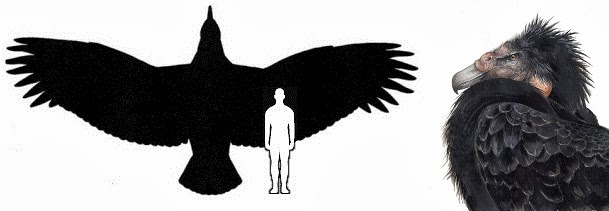
4. Argentavis: the largest flying bird


The largest flying bird to have ever lived had a wingspan of around seven metres and would have likely scavenged and displaced Miocene predators from their kills. It’s skull morphology suggests it was suited to swallowing prey whole so whilst humans may lie someway from its preferred prey it would still make for an intimidating site emerging from the darkness. 


5. Gigantopithecus: the real yeti 

The legend of the yeti has fascinated many people throughout history and there seems to have been no better candidate than Gigantopithecus. This ape stood at around three meters tall and while its teeth indicate it was exclusively vegetarian an unexpected encounter with such an enormously powerful ape would be far from desirable. 


6. Arctodus simus: the giant bear

Arctodus Simus, the giant short faced bear could look you in the eye whilst still remaining on all four legs. If the titan deigned to stand it would have easily reached three meters in height. Around 11,000 years ago Arctodus Simus is proposed to have filled the niche of a kleptoparasite; intimidating smaller predators such as dire wolves, Smilodon and American lions from their kills with its enormous size and strength.


7. Utahraptor: flesh eating dinosaur 

There had to be at least one theropod (clade to which all carnivorous dinosaurs belong) dinosaur in here. Considering T.rex or Giganotosaurus would find it near impossible to fit inside an alleyway we’ll take the lesser known Utahraptor. The Velociraptor in Jurassic park may have been greatly exaggerated in size, being in reality the size of a turkey, but Utahraptor dominated even these exaggerated raptors reaching seven meters in length and with a sickle claw nine inches in length clearly indicating this 126 million year old predator could disembowel a human with consummate ease. 


8. Megalania: giant monitor

The size of this giant monitor lizard is difficult to determine as several studies place the weight anywhere from 300kg to nearly 2 tonnes. Regardless Megalania is still a monster compared to any modern day lizards. With heavily built limbs and a huge skull full of viscously serrated teeth it is proposed to have hunted Australian megafauna such as Diprotodon the ‘giant wombat’. If that wasn’t bad enough it seems likely Megalania, akin to modern monitor lizards such as the komodo dragon, was venomous making Megalania not only the largest terrestrial lizard but the largest venomous vertebrate to have ever existed. 


9. Kelenken: terror bird 

Picture a three meter tall bird with a skull 28 inches long, 18 inches of which was composed of a beak that was used in the same manner as an axe to inflict debilitating injuries on its prey and you get a rough idea of why it might be a good idea to stay the hell away from Kelenken. Belonging to the aptly named ‘terror birds’ this particular animal had the largest head of any bird known and was theorized to have either delivered viscous hammer blows to crush the bones of large prey or grab hold of smaller prey and shake them in much the same way that a dog might shake a rat today with the small addition that Kelenken would usually end up breaking the back of the unfortunate organism.

10. Euchambersia: Permian predator

By far the smallest animal on this list Euchambersia was a reptile that lived before the dinosaurs in the Permian period 250 million years ago. Euchambersia was a member of the therapsid order of reptiles which included the ancestors of modern day mammals and are often referred to as the ‘mammal like reptiles’. Despite its small stature this predator had an ace up its sleeve… Venom. The large canine teeth clearly exhibited by Euchambersia had venom grooves connected to venom glands in a very similar way to modern snakes in order to inject venom into the prey upon biting down. This killing strategy made Euchambersia a force to be reckoned with in the Permian deserts of South Africa.

Do you have any other suggestions? Let us know in the comments section.