Showing posts with label fun. Show all posts

Monday, 17 November 2014

The IgNobel awards

The ‘stinker’. Official mascot of the IgNobel awards

“For work that first makes people laugh and then think”

by Felix Kennedy

September 18th saw the 24th annual IgNobel awards ceremony take place. Now, almost as famous as the Nobel Prize awards they aim to mimic, prizes are given for research that ‘first makes you laugh, and then makes you think’. The prizes are intended to celebrate the unusual, honour the imaginative and spur people's interest in science, medicine, and technology.

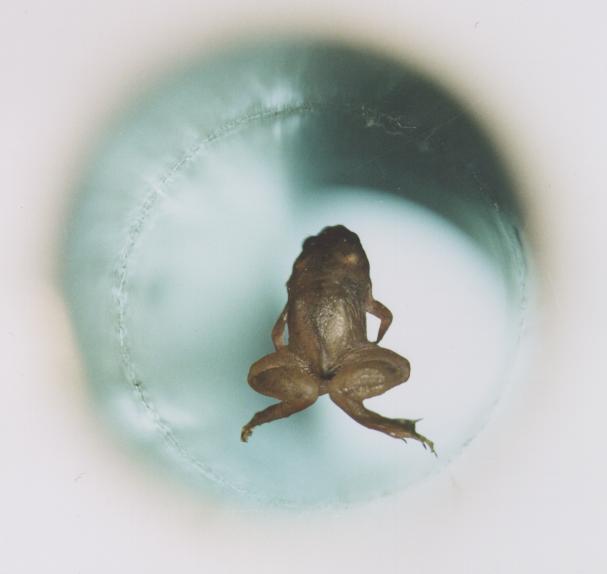
Past notable winners have included University of Bristol professor, Sir Michael Berry, who won the prize along with Sir Andre Geim, for floating a frog in a strong magnetic field. This is possible as almost all material displays a very weak type of magnetism called diamagnetism. Even material that would never usually be regarded as magnetic, such as water, contains electrons. Under a strong enough magnetic influence, the electrons within a material align and develop a magnetic field of their own that opposes the magnetic field they are in. This causes the material to be repelled from the magnet and if the repulsion is strong enough, the material will simply float, in this case the frog. Although the feeling of weightlessness was probably rather disconcerting to the frog, I would like to point out that no animals were hurt in the undertaking of this experiment-the frog was completely fine afterwards!
A weightless frog, floating in a magnetic field

Historically, IgNobel prizes have been awarded for rather obscure work, but real world applications have been found for discoveries that may seem merely interesting at first glance. A good example is a study that won the IgNobel prize in Biology showing that malaria mosquitoes (Anophelese gambiae) are equally attracted by the smell of Limburger cheese and human feet. Since then traps have been baited with Limburger cheese across Africa to help combat the epidemic of malaria. Another such example was in the field of Chemistry when the 2011 Chemistry IgNobel prize went to researchers who determined the ideal density of airborne wasabi to wake people up. The research has now been incorporated into some alarm systems to help wake deaf people in the case of an emergency.

On the other hand, some winners have produced work where it hard to find an application in the real world. This rather extensive list includes the 2008 IgNobel prize in Biology that was award to researches for discovering that fleas on dogs jump higher than fleas on cats. In another case a prize was awarded researchers from Scotland’s Rural College for their work on bovine behaviour. They found that cows that have been lying down longer are more likely to stand up soon, however once a cow has stood up it is much harder to predict when it will lie down again. Other cow related IgNobel prizes include one given to Newcastle University researchers who found that cows with names produced more milk than those without names, and one given to researchers who developed a method to extract vanilla flavour from cow dung. In this instance vanillin was extracted in a more cost efficient method than taking it from vanilla pods. This means if you want cheaper vanilla extract for your cakes, then look no further a field of cows!

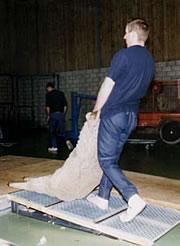
With other winning pieces, if you really try, you might just be able to find some useful information. For example, unless you have rather stubborn sheep and are looking for the easiest floor to pull them across, I can’t see why a paper written by Australian scientists entitled "An analysis of the forces required to drag sheep over various surfaces” would be of any interest to you. Despite this, the paper still won the IgNobel prize in Physics in 2003.

Some prizes are award in jest to people you may not think deserve recognition for their work. One that falls into this category is the 2005 IgNobel award for literature, given to the ‘internet entrepreneurs of Nigeria’. You may know these people as the ‘lost relative’ scam artists, where an email will pop into your inbox from some distance relative explaining that they are in line to inherit a large sum of money. The catch is they need a small amount of cash to pay some legal fees and, if you are able to pay the fees, then you would be rewarded handsomely once they receive their money. Unfortunately the story is a fable, but the less savvy amongst us have sent money abroad in a hope of receiving part of the fortune anyway. The organisers of the IgNobel awards found that this fraud showed ingenuity and imagination, awarding the prize for literature to these con artists. Another controversial winner was the president of Belarus, Alexander Lukashenko, who won the IgNobel peace prize rather ironically, in 2013. He received the Ig Nobel award for decreeing that it would now be illegal to applaud in a public area and he shared the award with the Belarus state police department for arresting a one armed man for clapping in public.
Sloping, slatted, wooden platforms are preferable for sheep dragging.
Sheep pulling over the preferred surface

The breadth of work that the prizes cover and the weirdness of some of the academic work complied here, I believe, is outstanding. I think it is also interesting how the IgNobel awards are also used to highlight questionable work, such as the distant relative scam and the odd laws that have been introduced in Belarus. If you have enjoyed this article I suggest you have a look at the rather extensive IgNobel award Wikipedia page. There are many more interesting winners that I have not been able to list here and I am certain many will ‘First making you laugh and then making you think’

All that is left to say is that I hope you are looking forward to the 2015 IgNobel prizes as eagerly as I am!


Sunday, 10 August 2014

Tortoises master the tablet

by Daisy Dunne

A team of tortoises from the University of Lincoln have successfully learnt to use touchscreen technology to win treats from scientists, who hope to learn more about the reptile's unique method of processing spatial navigation. Whilst mammals use the hippocampus for matters of geography, reptiles are thought to use a similar enigmatic structure known as the reptilian medial cortex.

"Tortoises are perfect to study as they are considered largely unchanged from when they roamed the world millions of years ago,” says Anna Wilkinson, who trained the tortoises using strawberry rewards, “this research is important so we can better understand the evolution of the brain and the evolution of cognition."

Impressively, two of the tortoises even went on to use the information they had learnt in a real life scenario. After learning to peck blue circles on one side of a screen in exchange for a reward, the reptiles chose to approach the same side of an experimental chamber when presented with two empty blue bowls similar to the virtual circles.

This outcome suggests that like the majority of animals, reptiles rely on 'landmarks', and not just simple motor processing, to orientate in their environment. Wilkinson hopes this study will open the door for a wider adoption of touchscreens in animal behavioural studies.

“The touchscreen is a brilliant solution as all animals can interact with it, whether it is with a paw, nose or beak. This allows us to compare the different cognitive capabilities", she says.


Monday, 24 March 2014

Inside story: Dr Craig Butts - School of Chemistry

Interview by Melissa Levy


Dr Craig Butts is a reader for the school of Chemistry as well as a researcher in the area of structural and mechanistic chemistry, with special emphasis on Nuclear Magnetic Resonance. If you want any more information about what he and his group do then follow this link.

Q. Where did you go to university and what did you study?
“So I studied science at the University of Canterbury in New Zealand, I did a BSC honours in science and then majored in chemistry.”

Q. How did you get all the way from there in New Zealand to here at Bristol?
“I went into science in university basically because I had fun doing it at school! But up until I was about 16 I wanted to be an accountant (this was in the 1980’s and I wanted to be a yuppie (!)) [But] I suddenly realised that accountancy wasn't something I enjoyed a great deal and in fact I much preferred blowing things up in class. And so I went into science at university and…the bit that I really enjoyed was doing the research project in my final year, which made me want to carry on in academic research or in research at least. Particularly due to the encouragement of my supervisor who, about 6 weeks into my project basically just walked up and said “you obviously enjoy this, you’re good at it…do you want a PhD?”. The deal was if I got a first class honours then I could have a PhD place and so I then carried on to do my PhD with my project supervisor working on photochemical reaction mechanisms trying to work out how these photochemical reactions proceeded. In particular we were interested in nitration reactions using a compound that was only really studied in the 1950s as a rocket fuel adaptive by the Russians, tetranitromethane – it was hideous stuff… and we knew that it did this photochemical reaction but we wanted to know HOW it worked and why it worked, and the only evidence that there was in the literature we were pretty sure was wrong!  Near the end of my PhD realised that I hadn’t quite worked out what I wanted to do afterwards! In New Zealand there are not a lot of opportunities around for PhD trained chemists – which was a bit of an oversight on my part - but it never bothered me until that stage! 

So the first email I ever sent outside of the chemistry department in Canterbury was to Professor Rodger Alder here at Bristol and I basically said ‘What’s the deal? Are there any jobs over there? Can I get one?’ and he wrote back and said ‘yeah I’ve got some funding for a post-doctoral research post for 3 years’ and so I applied for that and got it…. I submitted the final draft of my PhD thesis on the morning and on the afternoon I got on a plane to Britain and started my postdoc!”

Q. How did you find his email address or him at all?
“How did I find his email address? I have no idea!! At that stage the web was really early on… I guess there must have been a Bristol website that I would have looked at but I knew to contact HIM because my PhD supervisor had sent students over to him in the past. Once I got over here my plan was always: come over to Britain for 3 years, get this postdoctoral experience which you had to have in order to go and become an academic there… and I never got around to leaving!  I was [now] 23 and I’d never had a job interview, so I applied for a temporary job at the university of Exeter as a lecturer thinking I’d never get it because I’m only 23 and I’ve no experience but I should at least have this practice! And blow me down if they didn’t offer me, not the job that was advertised… they actually gave the job to someone who was already at Exeter and I got his job. So yeah I got lucky basically! [When] I had just submitted the job application I went to the out to celebrate because I was just starting to think that I might actually stay in Britain. I went out to the pub on a Friday night and I started asking everyone in the pub (boys girls whatever) if they had a passport and if they would therefore marry me! And one of the people who walked into the pub subsequently married me! About 5 years later I mean she didn't agree to go out with me for another year! [So] I met my wife and got married and had kids and never quite got around to leaving. Simple as that! 

And then 2005 they closed the chemistry department at Exeter and at that stage I was contacted by my soon-to-be boss here and they said that they had a job here managing the NMR facility, so I took that. It wasn't actually an academic post and so I spent a couple of years getting back into an academic post here at the university and I've been going here ever since.”

Q. If you had to describe the research you do to someone who isn't an expert in chemistry how would you describe it?
“So what we do is primarily to work out the structure of chemicals and we use NMR spectroscopy to do this. NMR spectroscopy is basically the same thing as you do in MRI in hospitals, instead of doing it on a whole person we do it on a very small sample and we look at it on a molecule by molecule basis. My particular research interests are working out ways to better determine those structures and work out what shape they are and what size they are and how they are moving in solution and things like that.”

Q. And how would you describe your typical day?
“Ahh my days are very very varied!  So I split my time into three parts. One is running the NMR laboratory; so I manage the NMR laboratory and I have to, along with the technical staff, look after something like £3 million worth of NMR instruments (soon to be 4 million) and so I spend about a third of my day working with PhD students and post doc researchers who are using those instruments and have run into challenges and problems that they can’t solve without a bit of help, and trying to work out ways to get new instruments which have better or more capabilities. I spend about a third of my time doing research with my own group; so every morning 9 o’clock one of my group come in for their weekly meeting and we talk about how their research is going and what that’s doing. Then about a third of my time or so is spent doing all of the other things that come with academia so primarily teaching, both undergraduate where I teach to the chemistry students but also postgrad teaching which is aimed particularly at NMR spec and the more advanced applications of that to the huge variety of projects that we have in the university.  And then there’s the boring admin bits that we have to do as part of the job.”

Q. Do you have a favourite part of your job? If you had the choice would you chose JUST lecturing or JUST research?
“No… I’d chose to do all of them! To me research is a jigsaw puzzle, you’ve got a problem to solve and you have to know all the different ways of solving it.. Then you start with the corners you build up the edges and then you stick everything into the middle. That’s fascinating to me I mean I get to do that for a living – that’s great fun.  But it’s hard work, there are bits of it which are mind numbing and monotonous and so teaching is a completely different break from that. You get to stand up and get excited about what you do in front of a bunch of people, trying to get them to understand what you do and and why you do it and how you do it, hopefully to the point that at the end of that they know better than you do…I wouldn’t want to do one thing or the other really, if I did either full time I’d die! The paperwork [though] I could avoid quite merrily! “

Q. What do you do when you’re not at university? 
*laughing* “So there are three things I do when I’m not at university. First and foremost I’ve got three kids who are an absolute joy and I spend most of my time... well I’d like to say playing with them and teaching them and all the other things that parents are supposed to do but I think running around after them better describes it. Second thing, I’m a sports fanatic [and] I follow pretty much anything that involve a ball or a bat, so obviously football and rugby and cricket, and then when my wife can’t hear me on a Sunday night I’m often listening to American baseball and bizarre things like that. And the third thing I do is, sad to admit, research.... My research is a hobby for me, pretty much every day in some way fashion or form if I’m not on holiday I’ll be logging in to some of our spectrometers or checking what’s happening or I spend a lot of time talking to people in the states about different NMR techniques and tricks and tips that we can use. I’ve always looked at my job at being my hobby and so I have to come into the office to do my hobby sometimes and other times I get to do it from home.”

Q.What advice would you give to someone looking towards a career in science? Would you recommend academia?
“Absolutely! You have to have the right mind-set; you have to be the kind of person who likes puzzles and problems and likes long term challenges and targets. Academia is about saying ‘we’ve got this big long term goal, let’s start now to solve all the problems and the challenges on the way’ and that’s quite a hard thing to keep focused on over long periods of time. I've worked on projects that have taken over a decade to come to fruition, when they do come to fruition it’s a fantastic thing. I had a look at jobs in industry when I was younger and I just couldn’t do it! I couldn’t do that short term project focus that dominates in industry and commerce. [Academia] is hard work, particularly early on in academic careers, there are a lot of targets you have to achieve very quickly and at a very high level, and that’s very hard to do when you’re just starting out but it’s thoroughly enjoyable. I never ever (I keep telling people this it’s very sad) don’t want to come to work. I never sit here and think ‘oh it’s only 2 o’clock I’ve got another 3 hours before I get to go home’, never happens… I get ‘Oh it’s 4 o’clock I guess I have to leave!’ Not because I don’t want to leave *laughing* but because I have so many things to do and so many things I want to do.”

Q. If you could do science/research with anyone (dead or alive) who would it be?
“I want to do science with people who love science, who get as much enjoyment out of it as I do. To be honest I’m not interested in doing science with Einstein or Marie Curie (well particularly not Marie Curie…) or anything like that, I want to work with lots of people on lots of things and that’s one of the reasons I enjoy my job. I get to do chemistry with 250 side-kicks... Well I guess they’re not my side-kicks …. So I’m going to avoid the question and say that I want to keep on working with the people I’m working with, I mean I get to choose in my job who I work with what I work on when I work on it and to me is all part of the joy of it!”

Monday, 25 November 2013

Nomenclature – What’s really in a name?

by Sam Matchette

If I were to ask you what Captain Blackbeard, the Rocky Mountains and jeggings all have in common, what would you say? No, this is not a joke – although this would make for a very intriguing start to a ‘… walked in to a bar’ gag. The answer is simple: they each have a very appropriate and informative name. Captain Blackbeard had a beard that was (probably) black, the Rocky Mountains are certainly rocky and jeggings are the most recent descriptive portmanteau to hit our vocabulary shelves! However, the art of nomenclature (naming) isn’t always as straight forward; a point very relative in the biological world with regards to naming species; formally called Binomial nomenclature.

First and foremost, binomial nomenclature itself differs depending upon the organism you are dealing with. If you are naming animals, you would consider the International Code for Zoological Nomenclature (ICZN), whereas for plants, fungi or algae you would use the – very appropriately named - International Code for Nomenclature for algae, fungi and plants (ICN). Both resources enforce a series of codes and rules that one must abide by, in order to maintain evidential consistency throughout the natural world.


Focusing upon the animal kingdom, the ICZN has six main principles. When a species is first discovered, it is described and given a name. The first principle, named binomial nomenclature, states that the name of any given animal is made up of two Latin names (binomen); a generic name and a specific name. Devised by Carl Linnaeus, this principle embodies all the species seen today, including Homo sapiens, Passer domesticus, Gibbula umbilicalis. This name must be unique, as claimed by the principle of homonymy. The discovered organism’s name is recorded on an ICZN database together with name of its discoverer and the date of discovery. For each species ever described on the database, there is usually a list of names (both generic and specific) provided after the first, long-standing name was put forward. These, essentially irrelevant, names are called the junior synonyms. They only come in to play if a re-classification occurs. If there is a species-split with a new population needing a name, the principle of priority ensures that the new specific name is the oldest available junior synonym. Those name conflicts that cannot be resolved using priority are resolved by the principle of first reviser; the first subsequent author decides which name(s) to use from that moment on. Slightly more confusing is the principle of coordination; which presents when a family-group name, genus-group name or species-group name is established, all other relevant groups must also simultaneously bear that name with relevant prefixes. For example, the family name Giraffidae was established, meaning that the sub-family name (should we need one) automatically becomes Giraffinae. Linking with this is the principle of typification. This claims that any family-group name must have a type (or representative) genus and any genus-group name must have a type species. For example, the family name of Giraffidae has Giraffa as its type genus (as in Giraffa camelopardalis).

Despite the terrifying formality of this process, if all principles are fulfilled, then the fun can begin. And boy, do scientists like to have fun! The beauty of needing to be unique (as the principle of homonymy requires) is that you can be as creative as you like. After all, as with everything, names come in all shapes and sizes; from the great evening bat, Ia io, to the soldier fly, Parastratiosphecomyia stratiosphecomyioides.

Longdong stream salamander 
Unsurprisingly, over the years, the concoction of creativity and taxonomy has produced some very interesting results. Usually, names originate from a description, a location, a person or an organisation relative to the organism’s discovery; however some have become remarkably tenuous and down-right crude. An example that springs to mind is the Batrachuperus longdongensis; a stream salamander with – you guessed it - an in-conspicuously long penis. Less subtle is the lily plant with the name Narcissus assoanus – discovered seemingly by a scientist with a phenomenal grudge. Scientists have even delved in to the world of popular media; notably the spider, Apopyllus now, who appears to be an avid Martin Sheen fan.

One of my personal favourites – from a devilishly, imaginative view point – is the Thorny Devil. This lizard’s scientific name is Moloch horridus; honouring the heaven-rebelling demon Moloch known to devour children, aptly comparative to the lizard’s diet of unsuspecting ants. Furthermore, many scientists have dabbled in creative word-play; creating such scientific names as the leafhopper family, Cicadellidae, which is officially the longest word with all its letters twice, or the palindromic beetle, Orizabus subaziro.

Thorny Devil
For the narcissistic among you, it may be disappointing to hear that it’s just ‘not cricket’ when you name a species after yourself. However, there are ways and means of overcoming this. The obvious being to find a friend that shares your desire to have a species named after them, and then each simultaneously discover a species that can be named after the other person. Undoubtedly fiendish, but no less true as the taxonomists Reichardt and Lange-Bertalot evidently proved; honouring each other with name-bearing species in a Diatom genus.

So, if you’re the buddy biologist type endeavouring for a life of research, you may just want to take a moment and think: what would my species name be? It may be more fun than you think. Now, “Captain Blackbeard, the Rocky Mountains and some Jeggings walk in to a bar…”

Thursday, 17 October 2013

The distinction of mirror images

by Kate Hammond


Despite initial appearances the majority of mirror images are not identical. Each half has a distinct orientation, one left and one right. However, we appear not to retain this orientation information. Massachusetts Institute of Technology research scientist Daniel D.Dilks asked a random selection of people to recall the direction in which the queen was facing on a one penny coin. Only 50% could correctly identify her direction; even though it is an object seen everyday, the results were as if by chance. This would suggest that our memory of an object is actually independent of its orientation. Similarly, an advertising campaign presented two copies of the Mona Lisa to volunteers. In one (the original) she faced to the left and in the other (a manipulated version) she faced to the right. Although all easily identified the picture as the Mona Lisa, very few could say with confidence which was the correct version. The advertising campaign used the slogan ‘don’t mistake familiarity for knowledge’, but what can also be taken from this is further evidence that we represent the identity of an image in our memory independent of its orientation.

Practically, it makes little sense to store information regarding the orientation of objects. Distinguishing mirror images is very rarely needed, and, furthermore, we need to be able to recognize objects from all view points. However, it has also been shown that for a short period of time immediately after viewing an object, orientation information is retained. Looking at an object, looking away, and picturing it immediately afterwards confirms this. This has lead to a major theory concerning object recognition; objects are remembered as seen from a particular point of view, but the brain has adapted so that it stores with it its mirror image. The object can then be matched equally easily to itself or to its mirror image. In this way, the initial orientation information is lost.

Although it is mainly advantageous, this adaptation also has its downfalls. The visual system begins life unable to distinguish mirror images in memory. Consequently, when it is necessary to distinguish between two mirror images, we have to learn to encode each mirror image as an object in its own right. Taking the every day example of b/d and </>, little children struggle to distinguish between the two but over time the mirror images acquire the status of separate objects. This explains why everyone is able to picture b or d in their head, but is unable to picture the orientation of a coin.

Sunday, 13 October 2013

@Bristol Space Odyssey

by Laura Rogers


Ever wanted to play on all the exciting exhibits at the At-Bristol science centre, but felt too embarrassed as they are surrounded by children? Ever wanted to stargaze on the roof overlooking Millenium Square? Ever wanted to drink alcohol whilst at a museum? Well, adult-only nights at the At-Bristol are the perfect excuse.

I was lucky enough to attend ‘A Space Odyssey’, the adult-only night that enabled you to adventure into the depths of the sky and discover how we explore them. The night was from 6:30 to 10:00pm, however, this was not enough time to explore the whole venue and experience everything they had to offer. An insightful talk was given, in which experiments were conducted to show how satellites work. A personal favourite was when a spring was placed in hot water and immediately straightened. This phenomenon was applied to a model of a satellite, enabling it to open its wings via a current being passed through the wire, heating it up and straightening it. The welcoming Bristol Astronomical Society exhibited their telescopes, allowing us to observe stars in the sky. It was fascinating to see how a tiny spec in the sky was actually 2 stars, one orange and one blue. We had the chance to explore a recreated Martian landscape and analyse rock samples which was incredible.

At-Bristol has hundreds of interactive exhibits including: a giant hamster wheel, a walk in tornado, various water activities, exhibits to learn about the human body and many more. They were great fun to play with and helped to develop my scientific curiosity. We aimed to play with as many interactive exhibits as possible; my favourite was ‘startle’. This involved air suddenly spraying into your face, the reactions were recorded and played back in hilarious slow motion.

One of the latest exhibits, in the Zone, gives information on the science behind being a top athlete. It involves completing 5 challenges where you are set against an opponent. It was enjoyable and exciting, however, the only challenge I won was the final sprint finish! 

If you have seen the strange silver ball in Millennium Square, you may or may not know it is in fact a planetarium. You can take my word that it is much larger inside than it appears outside (Bristol’s Tardis) with a majestic screen spreading over the top of the sphere. We were transported from a view of the sky affected by light pollution to an astonishing view of the sky from a nearby countryside area. Just by listening to the audience’s ‘ooo’ and ‘ahh’ it was clear that everyone found the view spectacular. The autumn constellations were shown and a fantastic Astronomer, Lee, described the constellations and their associated Greek myths. This experience was breath-taking and is something I would highly recommend. I even recognised some constellation patterns and can now show off as I know the names and stories. 

The adult-only nights are great fun and enable you to experience the thrills of science through interactive exhibits, talks and demonstrations. The next adult only night is on Monday 9th December so keep an eye out for it.

Sunday, 17 March 2013

Brain Awareness Week

by Julie Lee


From the 11th to the 18th of March, At-Bristol held its annual 'Brilliant Brains Week'. The event is supported by Bristol Neuroscience, and is helped along by volunteers from a variety of backgrounds: undergraduates, postgraduates, neuroscientists, psychologists, and so on. Over 50 volunteer experts take part from around Bristol, including from University of Bristol, University of the West of England, and local NHS hospitals. At-Bristol's event is part of The Dana Foundation's 'Brain Awareness Week' (BAW). BAW is a global event which celebrates the brain through week-long public awareness events for families, schools, expanded to over 2800 partners in 82 countries.


Brain Awareness Week with volunteers from @Bristol
'Brilliant Brains Week' at At-Bristol is geared for older children, with three main 'activity stations' for children to experience throughout the week. Visitors have the opportunity to make a neurone out of pipe cleaners, try the 'Stroop' interference task (timed!), and draw sections of the brain on swimming caps to take home. In addition, on some days there is a 'Live Science' lab with a dissected pig's brain, which visitors are allowed to look at and even touch. Some tiny visitors were so enthusiastic about the real pig's brain that they poked it out of shape. All in the name of science! There are some 'passive' brain-related exhibits, such as a 'Neurobot' that lights up at a handshake and pulls back at a thumb pinch. Visitors can guess at the size of various mammal brains using play-doh, then weigh the 'brains' to test their predictions. Finally, there are some models of brains around the museum floor, as well as a real human brain in a case.

The children, even the young ones, were interested in learning about the three-pound lump inside their heads. Some of them had a surprising amount of knowledge already about the lobes in the brain. Whatever their initial knowledge base, every child, some holding pipe cleaner neurones, walked away having learned something new about the brain. All in all, a successful mission.

Thursday, 28 February 2013

A Nation of Fat Ducks

Toby Benham


Feeding bread to ducks is the equivalent of giving them junk food. Scientists have warned that one of Britain’s favourite pastimes is making ducks fat. Feeding bread to ducks is a source of carbohydrate with little other nutritional value. Although this is ok in moderation, ducks can face copious amounts of bread thrown at them at certain times of year. They tend to seek out this easy food source meaning that ducklings lose the training to forage for food. This leaves them hungry when they are not hand fed. Other problems include becoming more susceptible to predation as too much starch leads to the animal becoming bloated and lethargic – a prime target. They can also suffer from diseases originating from mouldy bread or the increase in faeces associated with over eating. Suggestions on what ducks should instead be fed include: corn, barley, grain and duck feed pellets. So, next time you decide to go to feed the ducks, leave the stale bread at home and grab a handful of grain instead!

Monday, 21 January 2013

Best title ever?


Surely this is the best title on an academic paper you have seen in a long time! The article, published in PLOS Neglected Tropical Diseases, investigates the prevalence of parasitic worms in stool samples. This paper has serious implications for people living in tropical regions and it is written in good humour, check it out here. It also features some stunning figures that must have taken hours to produce.......


Figure 1 from Krauth et al.

Wednesday, 5 December 2012

Synapse team visits @bristol


The Synapse Team had a fantastic evening yesterday exploring the @Bristol Science Centre in the heart of Bristol, as we attended the centre’s first ever evening event. For those of you who have never been it really is a ‘must see’. With the children all tucked up in bed, we got the chance to fulfil some of our childhood endeavours, creating huge bubbles and Christmas decorations with LED lights, interacting with and occasionally squishing some animated bugs, moving water down a dam, running in a giant hamster wheel and even dressing up as dinosaurs. We were amazed by the tornado tunnel and were proved weak compared to the magnitude of atmospheric pressure.


If that was not enough to keep everyone entertained, there was the extra bonus of a science show in which a Christmas pudding went up in flames. The Planetarium left most of our members star struck as it took students out of the city into the countryside to view and enjoy the autumn night sky in its full glory. Not only did we learn about constellations, but were reminded of a few Greek myths at the same time. Some of us even had a go on ‘animate it’ and I witnessed a few sending their animated videos back to their housemates or even their parents (although they may not admit it). Some were also caught on camera as they enjoyed drawing the Aardman animations.


The human body section kept the majority of us entertained as the evening drew to a close. Members got to have a go at designing proteins, learning about microsatellites and reading through the genetic code of the X chromosome. After eating shortbread shaped like conical flasks and test tubes and enjoying the odd drink, the team finally headed off home in the cold, gazing at the stars, still buzzing with excitement. Thank you so much @Bristol for a wonderful evening, we will be back.


Thursday, 29 November 2012

SYNAPSE issue 3 coming soon


Issue 3 of Synapse will be released online this week and the print magazine will be distributed over the next two weeks.

Sunday, 11 November 2012

Synapse Movember Quiz


It's MOVEMBERMovember is the month when men can free their upper lip of unnecessary shearing and their follicles can run free to do what they do best!

This calls for a novelty science quiz. Below is a selection of exceptional scientists who were also blessed with incredibly sculpted facial hair. How many of them can you name? Do you know why they are famous? Go on, give it a go! The results will be published on Saturday 17th, along with more information about these incredible individuals.


Results

(a) Louis Pasteur (1822-1895). Credited with identifying the 'germ theory of disease' and a founder of microbiology.

(b) Albert Einstein (1879-1955). Probably the most influential scientist of the 20th Century, he developed the theory of general relativity.

(c) Heinrich Hermann Robert Koch (1843-1910). Famous for isolating Mycobacterium tuberculosis and considered one of the founders of microbiology.

(d) Ernest Rutherford (1871-1937). The father of Nuclear physics, he developed the half-life concept and won the Nobel prize in 1908.

(e) Sir Henry Solomon Wellcome (1853-1936). Henry Wellcome was a pharmaceutical entrepreneur, famous for his charitable activity and financial support for science. I would say he wins in this Movember competition!

(f) Max Karl Ernst Ludwig Planck (1858-1947). The father of Quantum mechanics. He won a Nobel Prize in 1918.

(g) Nikola Tesla (1856-1943). One of the most famous engineers and inventors in history. He designed the modern alternating current (AC) electrical supply system.

(h) Alexander Graham Bell (1847-1922). Alexander Bell was an eminent scientist, inventor and innovator who is credited with inventing the first practical telephone.

(i) Alfred Binet (1857-1911). A French psychologist who invented the world's first intelligence test, the IQ test.

(j) Orville Wright (1871-1948). Orville Wright, along with his brother Wilbur, were engineers and inventors, responsible for the first ever manned powered flight.

Wednesday, 7 November 2012

Meet Dr Leonard P. Annectens

Tom Stubbs


The University of Bristol has many wonderful staff members, from the traditional to the unconventional. However, I bet most of you have never met a member of staff like this before. Dr Leonard P. Annectens is based in the Earth Sciences department. His responsibilities include educating research students and generally keeping an eye on things. Additionally, Dr Leonard P. Annectens has an extensive publication list, including the following high impact paper:  Hone. D.W.E, and Annectens, L.P. 2008. Macrorevolutionary trends in the Lungfish: Dope's rule. Journal of Revolutionary Biology, 245, 587-595.

Smell something fishy yet? OK  well if not, here are a few more of Dr Leonard P. Annectens’s responsibilities. His primary activity is hiding behind a rock and on occasions he entertains visitors. But, most importantly, he is always a "living fossil". Got it yet? Yes, Dr Leonard P. Annectens is in fact the Earth Science department’s very own lungfish. Known by most simply as Leonard, this West African Lungfish (Protopterus annectens) was originally brought into the department for research purposes. Having made such a great impression the powers that be granted him a special academic position researching human behaviour from an aquatic environment and elucidating the evolutionary relationship of dipnoans and tetrapods.In its natural environment Protopterus annectens inhabits temporary floodplains that are completely dry for part of the year. It is omnivorous, feeding on shellfish, amphibians and plants.

Dr Leonard P. Annectens’s staff page.