Friday, 30 October 2015

At-Bristol's New Planetarium!

By Laura Rogers


At-Bristol has recently undergone a million pound re-vamp of its planetarium, and I was lucky enough to attend one of their 3D shows.

As the show began, we were told about the extent of the upgrade, and were soon launched from the Earth, with our first view being of the Earth from space. Considering the fact that I get travel sick, so would prefer not to be launched into actual space, this was the closest I will ever be to seeing the earth from above our atmosphere. It was a breath-taking moment, as the three dimensional effects of the planetarium made it feel so real. You could hear the “ahhhh” of the audience as we all stared in amazement.

We then began virtually exploring the solar system, learning about each planet in turn; from being educated about Jupiter’s moons, to the atmosphere of Venus. I had not realised quite how toxic Venus’ atmosphere was, and if we were to actually have landed on the surface, rather than virtually doing so, we would be dead within seconds! However, what was most impressive was that all the comparisons shown were to scale and any incredible figures used were well backed up.


The show not only provided entertainment and spectacular views, but was an educational experience, and is something that I would highly recommend to anyone.

Monday, 26 October 2015

Earth's Larger Cousin

By David Morris 

In March last year, following three years of data accumulation and analysis, NASA disclosed the discovery of an exoplanet (a planet from outside our solar system) that shares enough characteristics with the Earth that it could potentially harbour life, Kepler-186f. Discovered by the Kepler space observatory, the body has a volume of approximately 1.48 x 10²¹ m3, just about 10% larger than Earth. Interestingly, the exoplanet is believed to show very little obliquity, the degree to which the axis of rotation of a mass tilts away from its plane of orbit. This means that it experiences minimal differences in seasonal weather. It is of comparable age to the Earth, is located roughly 490 light years away and can be found in the constellation Cygnus.


Kepler-186f is the first planet outside of our solar system discovered to have both a comparable size to the Earth and to be within the ‘habitable zone’ of its parent star. The habitable zone of a star is the range of distances from it where, given sufficient atmospheric pressure, any present water will be a liquid: a characteristic that is absolutely vital for the existence of life. Many exoplanets have this characteristic, but they are all at least 40 % larger than Earth, making them too dense to sustain life. This is the case for the other four exoplanets that Kepler-186f shares its solar system with. Their large masses draw them closer to their parent star due to gravity, making them too hot and therefore uninhabitable.


Kepler-186f orbits Kepler-186, a star half the size of our Sun. This star is known as a red dwarf, a star cooler and smaller than that of the Sun. Kepler-186f receives roughly a third of the heat energy that Earth receives, making it much less able to support life. The masses of red dwarves are generally so small that orbiting planets are likely to go into tidal locking. This process is caused by the gravitational pull of a mass on an orbiting body, compelling it to rotate at roughly the same rate as it orbits. This means that the same hemisphere is always facing the mass, as is the case for Pluto and one of its moons, Charon. This effect is also employed in getting artificial satellites to orbit the Earth correctly. Tidal locking would cause one side of the planet to be in constant ‘night-mode’ and the other in constant ‘daylight’, resulting in enormous temperature variations and therefore varying phases of atmospheric substances like water. Without a mechanism for swift planetary heat distribution, such as oceans, the planet would be uninhabitable. There is an approximately 50 % chance that Kepler-186f is orbiting its parent star with partial tidal locking. As a result of this, a single rotation of the exoplanet about its axis could take up to weeks or months, contributing to the prevalence of the aforementioned planetary temperature differences.


There are a wide range of atmospheric densities and temperatures that the exoplanet could support depending on its chemical composition. The greenhouse gases that keep a planet hot could be present in any number of concentrations, maintaining a specific surface temperature. The age of the red dwarf is also important as it will emit differing amounts of various types of radiation depending on its age. For example, if the red dwarf emits high levels of high-energy, ultraviolet radiation, as is prevalent in young red dwarves, the energy supplied could cause lighter elements like hydrogen and helium to escape the gravitational pull of the exoplanet, removing mass from its surface.

Given the information NASA has gathered, it is possible that Kepler-186f could support life. However, in order to fully determine its capabilities, the surface composition of the exoplanet needs to be examined further. Exoplanetary surface composition is very difficult information to obtain, especially for a body so far away. This is one of the many tasks that NASA is constructing the James Webb Space Telescope for, due to launch in October 2018. The telescope has been under construction since the beginning of 2011 and is planned to be sent to the L2 Lagrange point, 1.5 million kilometres from Earth, the furthest from the Earth that any man-made device has ever been sent. Consequently, the question as to whether other life outside our solar system exists may be answered within the coming years.

Tuesday, 1 September 2015

Friday, 22 May 2015

Science and Romance at At-Bristol's After Hours

Ever wondered what it's like to go to an After Hours event at At-Bristol? We sent Matt and Kitty, a science loving couple from the University of Bristol to their Valentines evening. Here's Matt's opinions on the night!

Was this your first time at @Bristol? What did you think of the theme?

No this was not our first time at @Bristol, we attended a night hosted by the psychology society that was based on the brain.
We thought the theme really suited the night (Valentine's Day). There was plenty to do related to the theme and otherwise.


Can you tell us a few things you did on the night? What was your favourite exhibit?

My personal favourite thing we did was (of course) trying all of the spicy food! The primitive dating was also fun and interesting. Seeing as it was @Bristol, we also explored and played on their other permanent features. As a physicist I felt obliged to play with the magnets and (attempt) to solve puzzles. The tornado wind tunnel is always an experience.

Did you get a chance to go to the Planetarium? What show did you see, and what did you think?

We did get a chance to visit the planetarium and watch a show on the night sky. The intellectual level of this was appropriate for al, interesting, informative and visually stunning.

Did you like the adult environment available at After Hours events? Would you recommended it to your friends?


We would definitely recommend after hours (I think we actually have!) to other friends looking for an interesting night.

Sunday, 4 January 2015

After Hours: Ice - Review by Hayley McLennan

The concept of After Hours events at At-Bristol is exceedingly clever. A few nights a year the science centre stays open from 6pm until 10pm, for over 18s only. There’s food, if you want it, and a bar. The lights are kept dimmed and you can explore to your hearts content. It plays straight into the age-old fantasy of being somewhere (school, a museum, a shopping centre…) when you’re not supposed to be, once the lights are out and the doors are locked.

The last event was on the 10th of December, with the suitably wintery theme of ‘Ice’. Immediately on entrance there was a table showing changing water patterns over the globe throughout the millennia, which gave the usual sobering message of global warming. Another exhibit allowed you to watch through a magnifying glass as water froze before your eyes in a beautiful crystalline pattern. The water pump driven by a giant hamster wheel was irresistible and kept spinning all night. A tasty touch was the free ice cream made with liquid nitrogen at the food bar.

The planetarium’s themed show on Inuit stargazing gave a new perspective on the night sky and a fascinating insight into the world of the ‘eskimos’, although it was sad to realise how much information from that culture has been lost over the years.

Taking a wander around the periphery of the centre, there was still access to many of the exhibits that didn’t fit in with the theme. For me, as a first time visitor to At-Bristol, this was wonderful. From optical illusions to aerodynamics, it was all delightfully engaging. I can picture it charming children during the day but surely no more than it charmed me and the other adults there for After Hours.

I should include a word of appreciation for the staff, working beyond their normal hours, who were nonetheless friendly and approachable, and kept everything running smoothly through the night. At 10pm when the announcement came that it was closing, At-Bristol was still busy and no one seemed quite ready to leave – I saw a few people sneaking one last go on the interactive exhibits on their way out.

I loved science centres as a child and it turns out that nothing has changed. If you feel the same way, or perhaps if you are seeking a slightly different Valentine’s date, the next After Hours is on the 14th of February, themed, of course, ‘Love’. 

Saturday, 20 December 2014

Science, Sobriety and Snake Oil: The Electrifying Story of the Overbeck Rejuvenator by James Ormiston

Here’s a challenge for you: name an inventor of an electrical device from before the Second World War.  Who springs to mind? Thomas Edison? Graham Bell? Maybe William Sturgeon, Samuel Morse or Alessandro Volta? If you’ve been caught up in the recent surge of near-mythological interest in Nikola Tesla maybe you think of him? Well here’s one person on the list who you’ve probably never heard of: Otto Christoph Joseph Gerhardt Ludwig Overbeck. Overbeck was a man of many interests, and during his life he was a chemist, inventor, curio-collector, writer, artist and, most notably, a self-proclaimed discoverer of the key to youth and vitality. The device with which he believed he had unlocked the secret of a long and healthy life was the Overbeck Rejuvenator, and armed with a qualified fascination in science and a canny business mind he marketed one of the most commercially successful electrotherapy devices ever made.

Born in 1860, the son of a Vatican priest, Overbeck began his career as a chemist, studying the subject at University College London until 1881. After becoming a Fellow of the Chemical Society in 1888 he went on to work at a brewery in Grimsby as scientific director. Here he was responsible for a few interesting developments, including an early attempt at making alcohol-free beer and a food extract product called Carnos which was in fact a forerunner to Marmite.  Even at this stage he had begun a rigorous habit of patenting everything he thought would become a successful invention, Carnos being his first, which would become a staple of his approach for years to come. His broad interest in science was evident in his personal library, which included books not only on chemistry but biology and geology among numerous other subjects. Such was his enthusiasm that he claimed at one point to have discovered an element new to science.

 Self-portrait (1902)

In the following years leading up to the development of his most famous invention, the Rejuvenator, Overbeck became increasingly interested in the prospect of restoring youth, seeking a sort of “elixir” with which he could help people live longer with better health. His artistic side demonstrated this in a poem written in 1889 called “The Alchemist”…

“Yet one more drop, & now! What do I see!
The forms of early youth! Forgotten dreams to me;
Rise with the misty clouds from age’s wintry rime;
and boyhood’s joy & health & summer clime
With scent of roses fills the air!
Old age be-gone!
For eternal youth prepare!”

He was a strong believer in the idea that electricity was the unifying key to not only life but the entire universe, and whilst electrotherapy was not a new idea at the time Overbeck was very keen to demonstrate its benefits to human health.  In 1924 he took out a patent for an “Electric Multiple Body Comb for Use All Over the Body”, the first patent relating to the invention of the Overbeck Rejuvenator. The Rejuvenator consisted of insulated metal combs which, when connected to a battery, applied a weak electrical current to the area of the body the combs were in brought into contact with. The patent made no reference to rejuvenating properties, but nevertheless the product was intensely marketed as a medical miracle. Overbeck frequently backed up his advertising with testimonials from satisfied customers, with such whimsical quotes as:

“…elderly members of an east coast golf club have practised with the rejuvenator, and their handicap has been halved, and they can play three rounds as against two formerly.”

“I have been using your Rejuvenator for about five months…and have found it of great benefit. I was suffering from Neuritis, but [am] pleased to say I have scarcely felt any pain this winter. I have worn spectacles for 25 years, and now my eyes are wonderfully improved…my hair, which was white, is being replaced with new dark hair. I think your Rejuvenator is a wonderful invention.”

In 1925 he published a book on the subject, “A New Electronic Theory of Life”, in which he presented the importance of electricity in conventional medicine. He cited numerous eminent scientists of the time to back up his ideas, but he also frequently referred to the Rejuvenator itself throughout as a cunning marketing strategy. This was a rolling theme in the promotion of his device: using his position as a scientist as a role of authority through which he could persuade people to buy the Rejuvenator. Overbeck claimed it could treat all kinds of ailments from asthma to psoriasis, and the BMA (British Medical Association) was becoming increasingly concerned that the layman would start to ignore conventional medicine in favour of this “easy fix” which had so far not shown much, if any, quantifiable medical success. A model of the device was acquired for testing, and they found that whilst the device was not necessarily dangerous there was potential for its misuse to cause ulcers in the mouth. More worryingly, there was good reason to believe that people using this form of alternative treatment to treat chronic conditions like diabetes would put off seeking established medical advice until it was too late.

The Overbeck Rejuvenator was sold across the British Empire and had a number of variants at prices starting at around 6 guineas. Overbeck even adjusted his advertising campaigns depending on where it was being sold in order to further publicise it, encouraging users in the Colonies to write back to him about their experiences. One of the key parts of the Rejuvenator’s marketing was a focus on its ability to treat certain conditions that people felt embarrassed to talk about, such as hair loss. So successful was the device that he was able to buy a house in Salcombe, Devon (now a National Trust site dedicated to his work and collections), where he was able to engage in his other passions of curio-collecting, art, music, natural history and all other manners of hobbies and interests. But soon the Rejuvenator would begin to lose traction as Overbeck’s advertising strategies came under fire from the scientific community…

Demonstration of the Rejuvenator as a treatment for hair loss. 


Investigations were mounted by the BMA in the early 1930s to contact members who had been apparently quoted in the Rejuvenator’s advertising campaigns in Australia and elsewhere. Intriguingly many of the responses said that whilst they had bought the devices, they had not given permission for their opinions (genuine or not) to be published. Some outright denied any involvement with the company and demanded an official explanation. A number of attempts were made to ban the Rejuvenator on both medical and legal grounds, but none seemed to be successful (probably in part due to the ruthless patenting and numerous user testimonies which protected the device). Otto Overbeck died in 1937, but the device remained on the market up until the Second World War, when resources needed to build it became too difficult to acquire. Amazingly however, over 30 years after he filed the original patent for the product, in 1955 an order for a new battery to power an Overbeck Rejuvenator was received by one of his associates.


Whilst the Overbeck Rejuvenator was not proven to be of any real benefit to health (despite its inventor’s insistence), it was one of a number of early electrical devices to appear in British homes and elsewhere which aided the mainstream acceptance of a relatively new and revolutionary power source. It also provided a valuable lesson of the power of advertising, especially when coupled with the authority of science to persuade the public to buy a product. This is a theme that continues to this day, see how many toothpaste adverts feature an interview with dentists! Overbeck may have been mistaken in his faith of medicinal electricity, he may have even known it was of little use and was simply a very good seller of his contraption, but one thing remains certain: his multi-disciplinary life story is one of both eccentricity and intrigue.  

Saturday, 29 November 2014

An interview with Professor Bruce Hood, School of Experimental Psychology, 11/11/2014 - by Melissa Levy

Professor Bruce Hood is a Professor of Developmental Psychology in Society. He is specifically interested in cognitive development from a neuroscience perspective, but also works on face and gaze processing, inhibitory control of thoughts and actions, spatial representation and action, naïve theories and the origin of adult magical reasoning from children’s natural intuitions. If you want any more information about what he and his group then follow this link: http://www.bristol.ac.uk/expsych/people/bruce-m-hood/

Where did you go to university and what did you study?

“My first university was the University of Dundee in Scotland where I did an arts degree. In Scotland you can do a four year degree and take lots of different topics, I didn’t know anything about psychology and I was doing things like economics, accountancy and finance but I had to take another subject and so I took psychology and fell in love with it! This made me decide that I wanted to be a psychologist! So I went to Cambridge and did my PHD there, so I’ve been in Scotland and Cambridge.”

How did you get from there to where you are now in Bristol?

“How long have you got?!
After Cambridge I had a position at UCL and then I got a MRC (medical research council) travelling fellowship which enabled me to go anywhere in the world and I went to MIT. So I did my post-doctorate at MIT and then I applied for a position at Harvard and I was an associate professor there for five years. Then I came to Bristol.”

How would you describe your area of research to someone who’s not in the field?

“Well I have very diverse interests but I suppose they all deal with aspects of development of mind - in the childhood origins of how we think as adults. I’m interested in children not because they’re kids but because I think they give a great insight into the complexity of adult behaviour and the human mind and also some indication as to how we’ve evolved complexity.”

How would you describe your typical day and your typical research? It’s obviously different to that of a chemist let’s say…

“Well unfortunately I don’t have the luxury of doing the research myself directly, although occasionally I will help out. I really love conducting research and collecting data but because I’ve got so many projects running simultaneously I can’t actually collect data myself. So usually it’s working with my post-docs and my grad-students to devise and design experiments, piloting them here in the centre and then very often taking them out into the community.
We do research at the @Bristol Science Museum, but we also collect data in the schools, so it’s a lot of what you would regard as field work. But if we were using a technology which doesn’t transport like eye-movement recordings or ERP (Event Related Potentials –brain signals) then we would do that in the lab.”

If you could go back to conducting the field work yourself would you do that or are you happy with where you are now?

“Yeah I am happy where I am now, but I’ve not lost touch with the sheer joy of data collecting. For me, experimentation is just wondrous and the fact that I can be paid for something that I enjoy so thoroughly is fantastic and I love to share that! I mean there are so many questions that I’d like to answer and I couldn’t answer them myself so I need to have people doing it for me and that’s why we have research students doing that all. I mean I would be delighted if I was just doing research.”

What advice would you give to someone looking for a career in science?

“Passion! That’s what gets you out of bed in the morning!
You have to have a sense of wonder and joy and curiosity, and if this is what you want then this should be enough to drive you forward, and if you have the confidence to do so then you should be fine.”

What has been your proudest achievement to date?

“Well I suppose it has to be giving the royal institute Christmas lectures on the BBC. I’m very passionate about what I do and I really want to take science out into the community and that is the pinnacle of public engagements so that gave me, for a very short time, a platform and a spotlight, which was really quite exceptional. I got to meet so many amazing people, I got to inspire people and I’ve had email correspondence from parents of young children – they still contact me three years later keeping me up to date with their achievements in science and I find that extraordinarily valuable to realise that what you do actually changes people’s lives and makes a difference.
 I’ve always felt that we (psychologists) have a bit of an identity problem that people don’t see us as a real science and that really annoys me. So that’s my other agenda, to make sure people understand how complex the mind can be and that it’s not common sense at all. There are some extraordinary things that we are yet to discover. So yeah I’m passionate about science communication.”

If you could do science with anyone, dead or alive, who would it be?

“Gosh, so many to choose from!
One of my greatest mentors was Richard Gregory. You may not know, but Richard Gregory was and still is a great influence on many of us. Richard effectively started the first science museum, the Exploratorium here in Bristol, and he was a great and passionate science communicator. He did some really brilliant work on vision and perception, has illusions named after him – everyone who works in my field of perception will know of Richard Gregory. He was of a genre with a connection to the past, he knew Wittgenstein, he was taught by some of the great names, so he made this connection for me with the past. But he was just so enthusiastic and so passionate – it was infectious, he was like a little child at times when he was talking about things! And really that’s what’s so important to me about science.


People think that science is dull and boring and of course it isn’t! You and I know that it’s actually very fulfilling, and  communicating that passion in a way which is sensible to the general public is what my agenda is.”

Thursday, 20 November 2014

Jaws: the impact of media on shark declines by Rachel Baxter


One of Hollywood’s favourite villains, sharks have always been dubbed as horrifying man-eaters. However, this is more fictional creation than fact, and as shark populations rapidly decline, are creations like ‘Jaws’ partly to blame?  

In 1975 when ‘Jaws’ hit our screens, sharks swam into the spotlight as malevolent killers lurking in the deep. Following the film’s release, shark fishing increased rapidly, especially in the USA, as many wanted to emulate the heroic protagonists, whilst others wanted to cull sharks to make the seas safer. This reduced shark populations and 40 years later they are still deteriorating, due to overfishing for sport and meat, particularly for use in shark fin soup, a traditional Asian delicacy.

Scientists estimate that shark finning kills up to 100 million sharks a year. Finning involves catching any shark, regardless of species or size, and removing its fin and discarding the body back into the water. This is often carried out whilst the shark is still alive and subsequently leaves the animal to die a slow and painful death. The heightened demand for shark fins is due to increasing prosperity in Asian countries such as China. This has resulted in a higher demand for expensive delicacies like shark fin soup, which costs up to $100 a bowl. Consequently, the value of shark fins has soared, meaning that thousands of sharks are killed for their fins daily. As a result, many shark species such as tiger sharks and hammerheads have experienced population decreases of over 90% in recent years.

Sharks are an apex predator throughout the world’s oceans. This means that they are at the top of the food chain and significant decline in their numbers has the potential to impact nearly every organism living in our seas. One issue is that in the absence of shark predation prey species populations will proliferate, thus decimating populations of their own prey. An example of this is already occurring in the eastern Pacific Ocean, spanning from California to Tierra del Fuego, at the southern tip of South America. The decline of sharks here has led to a huge increase in Humboldt squid, a predatory species of squid whose populations were historically controlled by sharks. However, due to the reduction in their natural predators, their populations have expanded rapidly and this is having an impact on fish stocks, as the squid will consume nearly any fish that they come across. The true impact of shark declines is still unknown but it is likely to change population numbers of a vast variety of different species and seriously upset the balance of marine ecosystems, all over the world.

Therefore, the conservation of sharks is key. Current conservation efforts include discouragement of shark consumption, especially in shark fin soup through methods such as petitions. Also, more and more sharks are becoming protected. In 1991 South Africa became the first country to protect great white sharks. Furthermore, many countries, including the UK, have now implemented restrictions on shark fishing and finning. Therefore there is hope for sharks, but attitudes need to be changed in order to increase support of conservation efforts.


To change attitudes, it is essential that people understand that sharks pose very little danger to humans; in fact we pose much more danger to them. Whilst an average of 4.2 humans may be killed by sharks each year, humans kill an estimated 100 million sharks annually. There are over 400 species of shark, whilst only 4 of these species have ever been involved in attacks on humans (great white, tiger, bull and oceanic whitetip), yet almost all shark species are affected by fishing. In fact, the chance of a shark attack is minute. Millions of people swim in the sea every year whilst only about 4 fatalities occur annually. In contrast, every year 150 people die due to falling coconuts, 10,000 die by lightning strike, and 24 are killed by flying champagne corks!

What’s more, many shark attacks on humans are thought to be accidental. Shark attacks often occur on surfers. This is because from below, a surfboard with four legs resembles the shape of a seal. In fact, sharks are never out to get humans, as we are not their natural prey. Humans are much larger and bonier than prey organisms such as fish and seals, and wetsuits are not part of a shark’s ideal diet! Also, the vast majority of shark attacks on humans involve only one bite. This is interesting as hunting sharks use an initial bite to weaken their prey, and then use further bites to kill. This indicates that most sharks that attack humans immediately realise that they have made an error, and consequently back away. So, is the revengeful, human-hunting shark from ‘Jaws’ simply an entertaining invention?


It is true that ‘Jaws’ is based on real events; the Jersey Shore attacks of 1916. These attacks involved four fatalities and one injury during the summer of 1916 off the Jersey Coast in North America. However, scientists concur that these attacks were a freak incident, and the same scenario has never been repeated. Ironically, Peter Benchley, the author of ‘Jaws’, became a keen shark conservationist, regretting his portrayal of sharks as monsters as it had such a significant impact on the world’s perception of them.

Perhaps, one day, films will undo what they have done and depict sharks in a new light. Swimmers will no longer be haunted by ‘ba-dum ba-dum’ and more people will be concerned by shark declines. This could reduce shark fishing and improve attitudes towards conservation, so that shark populations are saved before it is too late and the balance of our oceans changes forever.

Monday, 17 November 2014

The IgNobel awards

The ‘stinker’. Official mascot of the IgNobel awards

“For work that first makes people laugh and then think”

by Felix Kennedy

September 18th saw the 24th annual IgNobel awards ceremony take place. Now, almost as famous as the Nobel Prize awards they aim to mimic, prizes are given for research that ‘first makes you laugh, and then makes you think’. The prizes are intended to celebrate the unusual, honour the imaginative and spur people's interest in science, medicine, and technology.

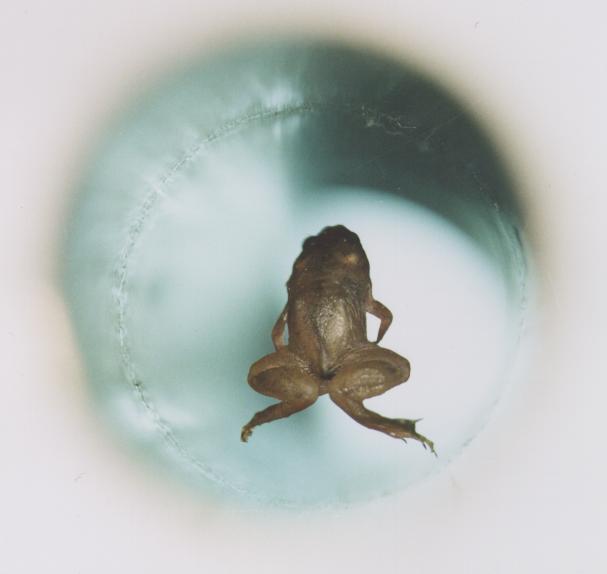
Past notable winners have included University of Bristol professor, Sir Michael Berry, who won the prize along with Sir Andre Geim, for floating a frog in a strong magnetic field. This is possible as almost all material displays a very weak type of magnetism called diamagnetism. Even material that would never usually be regarded as magnetic, such as water, contains electrons. Under a strong enough magnetic influence, the electrons within a material align and develop a magnetic field of their own that opposes the magnetic field they are in. This causes the material to be repelled from the magnet and if the repulsion is strong enough, the material will simply float, in this case the frog. Although the feeling of weightlessness was probably rather disconcerting to the frog, I would like to point out that no animals were hurt in the undertaking of this experiment-the frog was completely fine afterwards!
A weightless frog, floating in a magnetic field

Historically, IgNobel prizes have been awarded for rather obscure work, but real world applications have been found for discoveries that may seem merely interesting at first glance. A good example is a study that won the IgNobel prize in Biology showing that malaria mosquitoes (Anophelese gambiae) are equally attracted by the smell of Limburger cheese and human feet. Since then traps have been baited with Limburger cheese across Africa to help combat the epidemic of malaria. Another such example was in the field of Chemistry when the 2011 Chemistry IgNobel prize went to researchers who determined the ideal density of airborne wasabi to wake people up. The research has now been incorporated into some alarm systems to help wake deaf people in the case of an emergency.

On the other hand, some winners have produced work where it hard to find an application in the real world. This rather extensive list includes the 2008 IgNobel prize in Biology that was award to researches for discovering that fleas on dogs jump higher than fleas on cats. In another case a prize was awarded researchers from Scotland’s Rural College for their work on bovine behaviour. They found that cows that have been lying down longer are more likely to stand up soon, however once a cow has stood up it is much harder to predict when it will lie down again. Other cow related IgNobel prizes include one given to Newcastle University researchers who found that cows with names produced more milk than those without names, and one given to researchers who developed a method to extract vanilla flavour from cow dung. In this instance vanillin was extracted in a more cost efficient method than taking it from vanilla pods. This means if you want cheaper vanilla extract for your cakes, then look no further a field of cows!

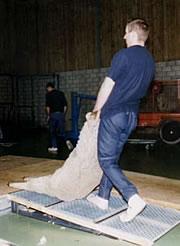
With other winning pieces, if you really try, you might just be able to find some useful information. For example, unless you have rather stubborn sheep and are looking for the easiest floor to pull them across, I can’t see why a paper written by Australian scientists entitled "An analysis of the forces required to drag sheep over various surfaces” would be of any interest to you. Despite this, the paper still won the IgNobel prize in Physics in 2003.

Some prizes are award in jest to people you may not think deserve recognition for their work. One that falls into this category is the 2005 IgNobel award for literature, given to the ‘internet entrepreneurs of Nigeria’. You may know these people as the ‘lost relative’ scam artists, where an email will pop into your inbox from some distance relative explaining that they are in line to inherit a large sum of money. The catch is they need a small amount of cash to pay some legal fees and, if you are able to pay the fees, then you would be rewarded handsomely once they receive their money. Unfortunately the story is a fable, but the less savvy amongst us have sent money abroad in a hope of receiving part of the fortune anyway. The organisers of the IgNobel awards found that this fraud showed ingenuity and imagination, awarding the prize for literature to these con artists. Another controversial winner was the president of Belarus, Alexander Lukashenko, who won the IgNobel peace prize rather ironically, in 2013. He received the Ig Nobel award for decreeing that it would now be illegal to applaud in a public area and he shared the award with the Belarus state police department for arresting a one armed man for clapping in public.
Sloping, slatted, wooden platforms are preferable for sheep dragging.
Sheep pulling over the preferred surface

The breadth of work that the prizes cover and the weirdness of some of the academic work complied here, I believe, is outstanding. I think it is also interesting how the IgNobel awards are also used to highlight questionable work, such as the distant relative scam and the odd laws that have been introduced in Belarus. If you have enjoyed this article I suggest you have a look at the rather extensive IgNobel award Wikipedia page. There are many more interesting winners that I have not been able to list here and I am certain many will ‘First making you laugh and then making you think’

All that is left to say is that I hope you are looking forward to the 2015 IgNobel prizes as eagerly as I am!